

Visualizing a distance of exactly fifty feet can be surprisingly difficult without a frame of reference. Whether you are planning a construction project, trying to understand the dimensions of a public space, or simply curious about how large objects compare to one another, understanding the scale of this specific measurement is useful.
A distance of fifty feet is roughly equivalent to 15.24 meters, a metric that provides a common standard for global measurements. By examining common objects, architectural features, and biological entities that share this length, you can gain a much better intuitive sense of how far that distance really reaches.
Understanding the Physical Scale of Fifty Feet
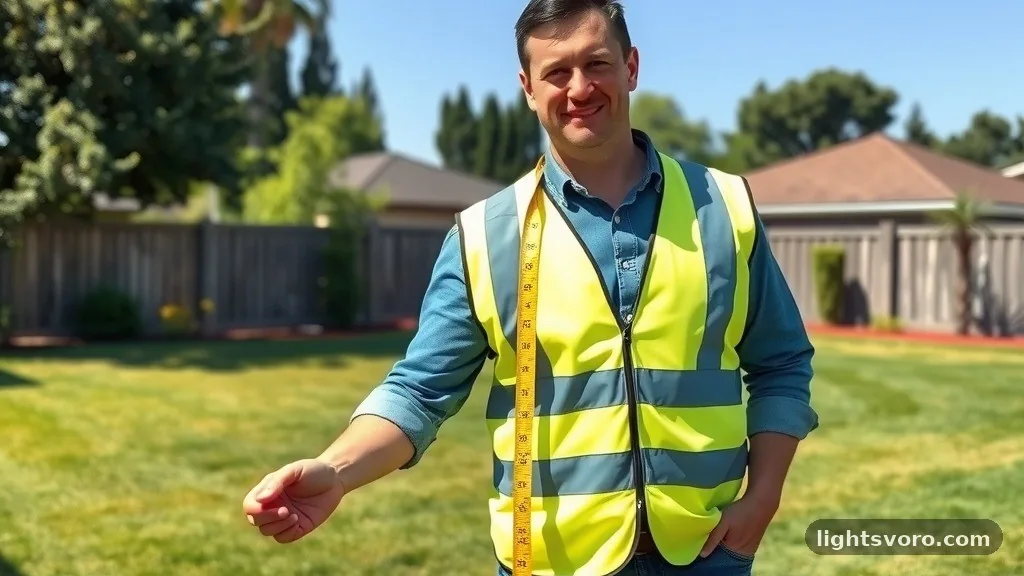
When we talk about fifty feet, we are describing a distance that is long enough to span a significant portion of a typical suburban lot, yet short enough to be traversed in a few seconds of brisk walking. To put it in perspective, fifty feet is equivalent to approximately three to four standard American passenger cars parked bumper-to-bumper. If you were to lay a standard measuring tape out on the ground, you would find that this distance is substantial—it represents the length of a medium-sized yacht or the width of a small professional sports court.
The concept of length is often abstract until we anchor it to real-world objects. Most people struggle to guess distances accurately because our brains are not naturally calibrated to measure space in precise imperial units.
By breaking down fifty feet into smaller, more digestible units—such as the height of a five-story building or the length of a bowling lane—we can begin to bridge the gap between abstract numbers and physical reality. This process of visualization is essential for architects, engineers, and anyone involved in spatial planning.
The Width of a Standard NBA Basketball Court
One of the most precise examples of a fifty-foot measurement is the width of a standard NBA basketball court. According to the official regulations set by the league, the court measures 94 feet in length and exactly 50 feet in width.
This provides an excellent visual aid for anyone who has ever stepped onto a hardwood floor. When you stand on the sideline and look across to the opposite side, the distance you are viewing is exactly fifty feet.
This measurement is critical for the game, as it dictates the spacing of the players and the geometry of the three-point line. If you are standing at the center circle and look toward either sideline, you are looking at a distance of twenty-five feet.
Doubling that distance gives you the full width of the court. Because basketball is a globally recognized sport, the dimensions of the court serve as a universal reference point for people in many different countries, making it one of the most reliable ways to visualize this specific length.
The Length of a Humpback Whale
In the natural world, biological size often defies our everyday expectations. A mature Humpback whale is a perfect example of a creature that fits perfectly within the fifty-foot range.
Adult Humpbacks typically range between 40 and 50 feet in length, with some individuals reaching slightly larger sizes. These massive marine mammals provide a sense of scale that is both humbling and impressive, helping us understand how fifty feet looks when applied to a living, breathing organism.
When you imagine a Humpback whale, think of its sheer mass compared to its length. A fifty-foot whale would weigh approximately 30 to 40 tons.
If you were to place a Humpback whale on a standard suburban street, it would occupy the space of roughly three and a half cars and would likely span the entire width of the road. This biological context reminds us that fifty feet is a significant distance, capable of accommodating some of the largest creatures to ever inhabit our oceans.
The Standard Length of a Bowling Lane
For those who spend time in recreational spaces, the bowling alley offers another precise reference point. While the total length of a bowling lane from the foul line to the headpin is 60 feet, the distance from the foul line to the point where the ball begins its descent into the pin deck is a very close approximation to our target length. Specifically, the lane itself—the polished wooden surface—is a long, narrow rectangle that creates a sense of depth.
If you have ever stood at the foul line and looked down toward the pins, you were looking at a distance slightly longer than fifty feet. By mentally subtracting the ten-foot section where the pins are set, you get a perfect mental image of what fifty feet looks like.
This is particularly useful because the lane is indoors and well-lit, allowing for a clear, unobstructed view of the distance. It is a controlled environment that makes it easy to measure the gap between where you are standing and where the target lies.
Walking Distance and Time
How long does it take to walk fifty feet? For an average adult walking at a comfortable, moderate pace, it takes approximately ten to twelve seconds.
This is a helpful metric if you are trying to estimate distance while standing in an open field or a large room. If you start a stopwatch and walk at a steady speed, counting the seconds, you will find that you reach the fifty-foot mark quite quickly.
Understanding this temporal component of distance is useful for accessibility planning and architectural design. For example, in a retail environment, fifty feet represents the distance a customer might walk between two departments.
It is a short, manageable journey, but it is long enough that it requires a distinct transition in the environment. By timing your walks, you can develop a “sixth sense” for distance that relies on your own body as a measuring tool.
The Dimensions of a Futsal Court
Futsal, a variant of association football played on a hard court, provides another excellent reference for the fifty-foot width. According to official FIFA standards, the width of a futsal court can range from 16 to 25 meters, but international matches are typically played on courts that are 20 meters wide, which is roughly 65 feet. However, smaller, local futsal courts are frequently constructed at a width of 50 feet to fit into existing multi-purpose gymnasium spaces.
This measurement is fascinating because it shows how sports infrastructure is often constrained by the dimensions of available buildings. When a gymnasium is designed, the architects often work in increments of ten or twenty feet.
A fifty-foot width is a common standard for school gymnasiums across the globe. If you are standing in a school gym, looking across the floor, there is a very high probability that the width you are seeing is exactly or very close to fifty feet.
Visualizing Fifty Feet in Car Lengths
One of the most practical ways to measure distance in an urban environment is by using the length of a vehicle. The average American sedan is approximately 14 to 15 feet long. Therefore, if you line up three cars, you have roughly 42 to 45 feet.
Adding a small gap between each vehicle brings the total to approximately 50 feet. This “car-length” rule of thumb is an incredibly effective way to estimate distance while driving or walking through a parking lot.
Using vehicles as a measuring stick is intuitive because we encounter them daily. When you see a row of parallel-parked cars, you can quickly count them to estimate the total length of the curb.
This method is used by traffic engineers and law enforcement to determine parking capacity and road clearance. By remembering that three to three-and-a-half cars equals fifty feet, you can quickly assess the size of any space you encounter.
The Height of a Five-Story Building
While we often think of fifty feet in horizontal terms, it is also a vital vertical measurement. A standard residential floor-to-ceiling height, including the thickness of the floor joists and subflooring, is roughly 10 feet.
Therefore, a five-story building stands approximately 50 feet tall. This gives us a clear vertical reference point that we can apply to city landscapes.
When you are walking through a town or city, look at the buildings around you. If you see a structure that is five stories high, you are looking at a vertical distance of about fifty feet. This scale is important for understanding urban density and zoning laws.
Many cities have height restrictions that limit residential buildings to this height to ensure that natural light reaches the street level. By observing these structures, you can easily internalize the scale of fifty feet in a vertical orientation.
Large Recreational Vehicles and Motorhomes
The world of luxury travel offers another example of fifty-foot objects. Large Class A motorhomes and custom-built recreational vehicles can reach lengths of up to 45 or 50 feet.
These vehicles are essentially houses on wheels, and seeing one parked in a campground gives you a very clear sense of how much space fifty feet truly occupies. They are massive, imposing structures that dominate their surroundings.
If you have ever stood next to a 50-foot motorhome, you understand the sheer presence of that length. It is longer than a standard semi-trailer truck bed, which is typically 48 to 53 feet.
Because these vehicles are designed to be lived in, they provide a sense of “habitable” space. When you consider that a 50-foot vehicle must accommodate a kitchen, bedroom, bathroom, and living area, it becomes clear that fifty feet is a significant amount of space, capable of hosting a wide variety of activities and functions.
The Length of a Standard Semi-Trailer

The trucking industry relies on standardized measurements to ensure that goods can be transported safely across highways. The most common semi-trailer used in North America is 53 feet long, though 48-foot trailers are also common. These massive steel boxes are a ubiquitous sight on our roads, and they serve as an excellent mental anchor for the fifty-foot measurement.
When you are driving on a highway and find yourself alongside a semi-trailer, you are looking at a distance that is nearly identical to our target length. The next time you are stuck in traffic next to one of these trucks, take a moment to look at the length of the trailer from the rear doors to the front kingpin.
This is a perfect, real-world example of what fifty feet looks like in a practical, industrial context. It is a long, heavy, and imposing span that helps us appreciate the scale of logistics and commerce.
The Anatomy of a Fifty-Foot Swimming Pool
In the world of competitive swimming, pool lengths are usually measured in meters or yards (25 meters or 50 meters for Olympic pools). However, many residential or community lap pools are built to shorter lengths.
A pool that is 50 feet long is a common size for a high-end backyard installation. This length is sufficient for a decent workout while still being manageable for a standard-sized property.
If you are a swimmer, you know that a 50-foot pool requires a certain amount of effort to traverse. It is short enough that you don’t feel exhausted after a single lap, but long enough that you can get into a rhythm.
Comparing this to the Olympic-sized pool (which is 164 feet long) helps highlight the difference between a professional training facility and a standard recreational pool. The 50-foot pool acts as a microcosm of larger aquatic environments.
The Span of Small Bridges and Walkways
In landscape architecture and park design, pedestrian bridges are often built with spans that hit the fifty-foot mark. These bridges are designed to cross small creeks, ravines, or landscaped ponds.
A 50-foot bridge is a substantial structure that requires structural engineering to ensure stability and safety. When you walk across a bridge of this length, you can feel the slight arch and the distance beneath your feet.
These bridges are often found in public parks or golf courses. They serve as a perfect reference for the distance because you are physically moving across the space. When you are standing in the middle of a 50-foot bridge, you are 25 feet from either shore.
This symmetry makes it very easy to judge the distance accurately. It is a peaceful way to observe the measurement, far removed from the noise of highways or the intensity of a sports court.
The Dimensions of a Standard Residential Lot
In many older American neighborhoods, the width of a residential building lot is often 50 feet. This standard was established in the early 20th century to provide enough space for a modest house and a side yard while maximizing the number of homes that could fit on a city block. If you live in or visit such a neighborhood, the width of the lot you are standing on is likely a perfect reference for fifty feet.
This measurement is deeply ingrained in the fabric of suburban life. When you look at the gap between the houses on your street, you are often looking at a 50-foot frontage.
This spacing influences everything from the amount of sunlight your garden receives to the privacy you enjoy from your neighbors. It is a human-scale measurement that defines the boundaries of our personal space and the character of our communities.
The Reach of Large Trees
Some of the most majestic natural examples of scale can be found in the canopy of mature trees. A healthy, mature oak or maple tree can easily have a crown spread of fifty feet. When you stand under the canopy of such a tree, the shadow it casts on the ground provides a clear, circular reference for that distance.
This is a living, organic way to visualize the length. Unlike a rigid sports court or a metal trailer, a tree’s canopy is fluid and soft.
Standing beneath the outer branches of a tree and looking across to the other side of its spread gives you a sense of nature’s dimensions. It is a beautiful way to understand that fifty feet is not just a measurement for construction or industry, but a scale that nature uses to grow and thrive.
The Length of a Standard Bowling Alley Lane
While we touched on the lane itself, it is worth exploring the entire bowling facility layout. A modern bowling center is a massive building, often housing 20 to 40 lanes side-by-side. Each lane is 42 inches wide.
If you have a center with 15 lanes, the total width of the playing area alone is over 50 feet. This creates a vast, open space that is highly recognizable.
The acoustic environment of a bowling alley—the sound of the ball rolling and the pins crashing—adds a sensory layer to our perception of the distance. When you are in such a facility, you are surrounded by these 50-foot-plus lanes. It is an immersive way to experience the length, as you can see dozens of them running parallel to one another, reinforcing the consistency of the measurement.
The Distance of a Typical Backyard Plot
For homeowners, the backyard is often the primary space where they interact with measurements. A 50-foot by 50-foot backyard is a very common size for a small-to-medium family home.
It is large enough for a swing set, a garden, and a patio, but small enough to maintain easily. This square space is a fantastic reference because it allows you to visualize fifty feet in two directions.
If you have a backyard of this size, you can stand in one corner and look along the fence line to the far corner. You are looking at fifty feet. Then, you can turn ninety degrees and look along the other fence line.
This provides a three-dimensional understanding of how that distance defines the square footage of your property. It is a practical, personal, and highly relevant way to keep the measurement in mind.
The Height of a Large Billboard
Have you ever noticed the massive billboards that line our interstates? These structures are designed to be seen from a distance at high speeds, and they are often quite tall. A large, standard-sized highway billboard is often elevated on a steel pole, and the sign itself can be 14 feet high and 48 feet wide.
This 48-foot width is incredibly close to our 50-foot target. When you see these signs, they are intentionally designed to be large enough to catch your eye from a quarter-mile away. Because they are often placed in open areas, the sign becomes a distinct marker in the landscape.
Recognizing that the sign is nearly fifty feet across helps you calibrate your eyes to the scale of the landscape as you travel. You can find more information about how these structures are regulated and measured by visiting the Federal Highway Administration, which provides comprehensive data on roadside infrastructure.
The Length of an Olympic-Sized Swimming Pool’s Width
While an Olympic pool is 50 meters long, its width is set at 25 meters. However, in many international swimming competitions, the pool is divided into ten lanes, each 2.5 meters wide.
This means the width of the entire pool is 25 meters, which is approximately 82 feet. But wait—if you look at the pool from the side, you can see the lanes marked out.
If you take two lanes, you have 5 meters, or roughly 16 feet. If you take six lanes, you have 15 meters, which is almost exactly 50 feet. This is a very common way to visualize the distance in a professional setting.
By looking at a block of six lanes in a large pool, you are looking at a 50-foot span. It is a precise and highly technical way to understand the measurement.
The Final Perspective on Fifty Feet
Ultimately, fifty feet is a measurement that sits right at the threshold of human perception. It is small enough to be seen in its entirety, yet large enough to contain significant complexity. Whether it is the width of a basketball court, the length of a Humpback whale, or the span of a residential lot, this distance appears in our lives in many different ways.
By practicing the art of observation—noticing the length of cars, the height of buildings, and the width of sports courts—you can sharpen your ability to estimate space. This skill is not only useful for practical tasks but also enriches your appreciation of the world around you.
The next time you find yourself wondering how long fifty feet is, look for these markers. You will likely find that the distance is already present in your daily environment, waiting to be noticed.