

Understanding spatial dimensions can often be abstract when relying solely on a ruler or a tape measure. When you ask yourself how big nine inches is, you are essentially trying to bridge the gap between a numerical value and a physical reality that fits within your environment. Visualizing this specific length becomes significantly easier when you associate the measurement with everyday items you likely encounter in your home, office, or kitchen.
By anchoring this figure to familiar objects, you can quickly estimate distances or sizes without needing to scramble for a measuring tool.
The Standard Letter-Sized Envelope 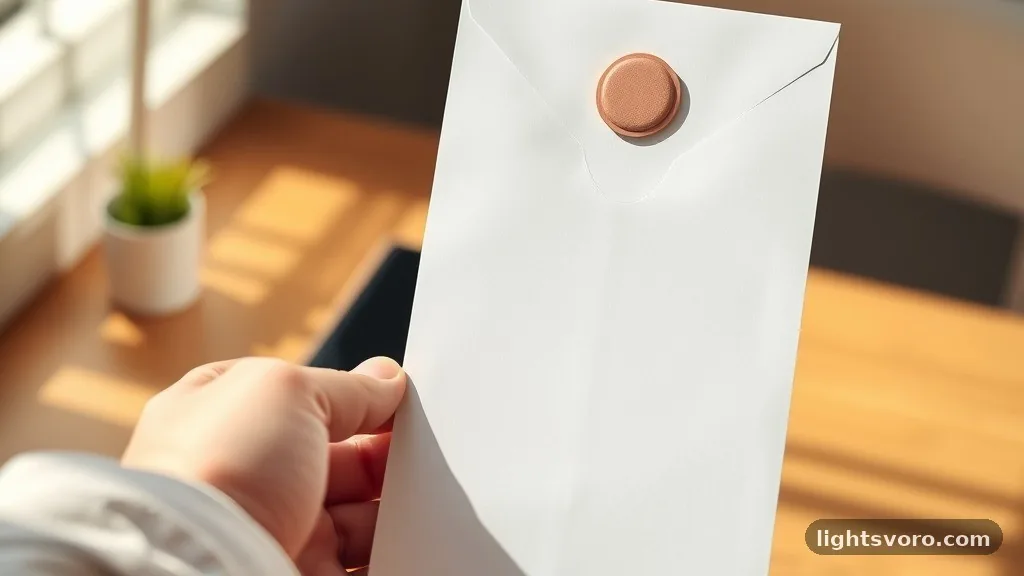
One of the most accessible ways to grasp exactly how long nine inches is involves looking at your mail. A standard business-sized envelope, often referred to as a #10 envelope, measures approximately 9.5 inches in length.
Because this is so close to the target measurement, you can easily visualize nine inches by simply imagining a standard envelope and subtracting a small half-inch sliver from the side. This mental shorthand is incredibly effective because almost everyone has handled this type of stationery at some point.
When you hold a standard envelope, notice how it feels in your hand. The width is substantial enough to hold a folded piece of paper, providing a tactile sense of scale. By mentally trimming that half-inch, you gain a very accurate representation of nine inches.
This is a practical, real-world object that serves as a reliable mental reference point for anyone trying to judge length on the fly, whether you are shopping for furniture, planning a DIY project, or simply settling a casual debate about the size of an item.
The Typical Dinner Plate
In the culinary world, plate sizes are standardized to accommodate specific portions. While dinner plates can vary, a standard salad or dessert plate often falls right into the nine-inch diameter range.
If you are sitting down for a meal and looking at a plate that feels slightly smaller than a large, oversized charger but larger than a saucer, you are likely looking at something that is roughly nine inches across. This is a common measurement in the restaurant industry, where nine-inch plates are frequently used for appetizers or lighter lunch portions.
Visualizing this is helpful because a plate is a two-dimensional circle, which helps you understand how nine inches functions not just as a straight line, but as a diameter. If you place your hand flat across the center of such a plate, you will notice that your fingers extend nearly to the edges. This physical interaction helps solidify the concept of the measurement in your mind, as the circular shape provides a different perspective than the linear length of an envelope or a ruler.
The Length of a Standard Tablet Screen
With the ubiquity of mobile technology, many of us spend hours interacting with screens of varying sizes.
An average tablet, specifically those with an 8-inch to 10-inch diagonal display, offers a perfect frame of reference. If you own an iPad or an Android tablet, the diagonal measurement of the screen is often the primary selling point advertised. A screen that is roughly nine inches across the diagonal provides a very precise mental anchor for the length.
Because we are so accustomed to the dimensions of our devices, visualizing nine inches in this context feels almost intuitive. If you hold your tablet and look at the long edge, you can see how the nine-inch mark sits against the frame. Most standard tablets have a long edge that exceeds nine inches, while the shorter dimension often falls closer to six or seven inches.
By observing the diagonal, you can quickly calibrate your brain to recognize the specific distance of nine inches, making it a highly effective tool for digital-native users who want to understand physical measurements through the lens of their tech.
A Substantial Chef’s Knife
If you spend time in the kitchen, you have likely handled a chef’s knife. A standard chef’s knife blade, excluding the handle, is frequently around eight to ten inches long.
A nine-inch blade is a common professional size, often favored for its balance and versatility. When you look at a chef’s knife, you are seeing a tool designed for precision, and its length is a critical part of its functionality.
When you visualize this knife, focus specifically on the metal portion of the blade. It is long enough to handle large vegetables like cabbage or squash but short enough to remain maneuverable. This provides a sense of “active” length—the kind of length that implies utility and reach.
By picturing a blade resting on a cutting board, you can get a very clear idea of how nine inches occupies space. It is a length that feels significant but not unwieldy, which is a useful distinction to keep in mind when you are trying to estimate other objects of similar dimensions.
The Average Length of a Human Foot
While human anatomy varies significantly, the average length of a man’s foot in the United States often translates to a size that falls near nine to ten inches.
Specifically, a men’s size 7 or 8 shoe is often very close to nine inches in length from heel to toe. If you happen to be a person with smaller feet or if you simply look at a pair of shoes in this size range, you have an immediate, mobile reference point for the measurement.
For those interested in the technical
For those interested in the technical side of sizing, you can visit the National Institute of Standards and Technology website to learn more about the formal systems of measurement. Understanding how our own bodies act as biological rulers can be quite empowering. By simply glancing down at your own feet or the feet of someone around you, you can perform a quick mental check to see if an object is roughly nine inches long.
This is perhaps the most “everyday” measurement tool available, as it is literally attached to you at all times.
A Standard Sheet of Legal Paper
While most people think of the standard 8.5 x 11-inch letter paper, legal paper is 8.5 x 14 inches. However, if you take a standard piece of letter paper and look at the width, you are already at 8.5 inches.
Adding just half an inch to that width gives you the exact measurement of nine inches. This is a very helpful visual aid because the paper is a flat, familiar object that you likely use in your daily life.
To visualize this, imagine the width of your printer paper. Now, imagine a tiny bit of extra space on either side of that paper. That small, incremental addition creates the nine-inch mark.
This is an excellent way to conceptualize the length because it builds upon a measurement you already know by heart. Instead of trying to imagine a blank space, you are modifying a known constant, which makes the estimation much more accurate and easier to recall under various circumstances.
A Large Novel or Hardcover Book
If you are an avid reader, you likely have a bookshelf nearby. Most standard hardcover novels measure between eight and ten inches in height.
A book that is nine inches tall is a very common sight in any library or bookstore. When you pull a book off the shelf, you can use its spine as a physical ruler. If the book is slightly taller than the average mass-market paperback, it is likely sitting right in that nine-inch territory.
This is a great way to visualize length because books are three-dimensional objects that occupy space in a way that feels permanent and solid. When you hold a nine-inch book, you can feel the weight and the span of the spine in your hand. This tactile feedback helps to lock the dimension of nine inches into your long-term memory.
The next time you need to estimate a distance, simply think of that favorite book on your shelf, and you will have a ready-made reference point.
A Standard Pencil Before Use
A brand-new, unsharpened pencil is usually around 7.5 inches long, but as you use it and sharpen it, the size changes. However, many mechanical pencils or larger drawing pencils can reach lengths closer to nine inches.
If you look at a full-sized wooden pencil that has been kept in a desk drawer, you can see how it compares to the nine-inch mark. While a standard Ticonderoga pencil is slightly shorter, the concept of a “long pencil” is a very good proxy for this measurement.
Visualizing this is useful because pencils are thin, linear objects. Unlike plates or books, which have width and depth, a pencil is primarily defined by its length. This makes it an ideal tool for visualizing straight-line distances.
If you imagine a pencil and then add just a little bit more length to it, you arrive at the nine-inch mark. It is a simple, effective mental exercise that requires no special equipment—just the memory of a common office supply.
A Large Water Bottle
The hydration trend has brought many different water bottle sizes into our lives. A standard 32-ounce water bottle, such as a Nalgene or a similar reusable container, is often around nine inches in height.
This is a very common object that most people carry to the gym, the office, or school. Because you are likely used to seeing these bottles sitting on a desk or fitting into a cup holder, you have a subconscious familiarity with their height.
When you look at a water bottle, you are seeing a vertical measurement. This is helpful because it allows you to visualize nine inches in a standing position. If you place your hand on top of the bottle and move it down to the base, you are tracing the nine-inch distance.
This is much more intuitive than trying to imagine a horizontal line on a wall. The cylindrical shape of the bottle also provides a sense of volume, which can help you understand how much space a nine-inch object occupies in a room.
A Large Smartphone or Phablet 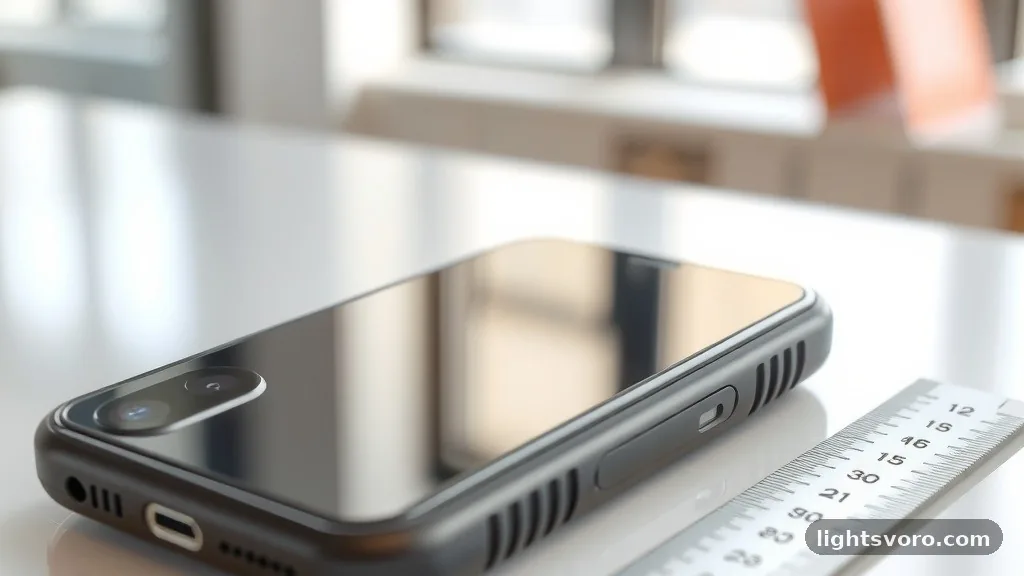
We have already discussed tablets, but modern smartphones—especially “Plus” or “Max” models—are increasingly large.
A phone with a 6.7-inch screen often has an overall device length of around 6.5 to 7 inches. However, if you have a phone case that adds bulk, or if you are considering the diagonal of a large phone, you are getting very close to that nine-inch threshold.
Even if the phone itself is
Even if the phone itself is slightly shorter than nine inches, it serves as a great “near-miss” reference. By imagining your phone and adding a couple of inches to the length, you can easily visualize the target measurement. Because we hold our phones constantly throughout the day, this is perhaps the most “at-hand” reference object available.
You can literally hold your phone up to an object you are trying to measure and mentally extend the distance by a small margin, providing a quick and effective estimation technique.
A Standard Small Pizza
Ordering a pizza often involves choosing between a 10-inch, 12-inch, or 14-inch pie. While a 10-inch pizza is very common, a 9-inch pizza is a standard size for a personal or “individual” pizza at many restaurants.
If you have ever ordered a personal pizza, you have seen a nine-inch circle. This is a fantastic way to visualize the diameter of a nine-inch object.
The beauty of using a pizza as a reference is that it is a circular object, which helps you visualize the width of an item. When you look at a personal pizza, you can see how it relates to the size of your plate or the width of the box it came in. This helps you understand that nine inches is a medium-small size—not quite large enough to feed a family, but perfectly sized for a single serving.
This context adds a layer of understanding beyond just the raw measurement, making the concept of “nine inches” feel more tangible and relevant to your daily life.
The Width of a Keyboard
Most full-sized computer keyboards, especially those with a number pad, are quite long. However, if you look at a compact or “tenkeyless” keyboard, the width is often around 12 to 14 inches.
If you look at just the main cluster of letters and the function keys, you can find segments that measure right around nine inches. This is a great reference for people who work at computers all day.
By breaking down the keyboard into sections, you can identify a nine-inch portion. For instance, the distance from the ‘Esc’ key to the ‘Enter’ key on many standard keyboards is often close to nine inches. This is a very precise way to visualize the measurement because you are looking at a static object that you use for hours at a time.
The tactile nature of the keys also helps to anchor the distance in your mind, as you are physically interacting with that span every time you type.
A Standard Ruler
It may seem obvious, but the most direct way to visualize nine inches is to look at a standard 12-inch ruler. Most people have a ruler tucked away in a junk drawer or a school supply bin. By looking at the markings, you can see exactly where the nine-inch mark falls.
It is three-quarters of the way along the length of the ruler. This is the gold standard for measurement, and it serves as the ultimate “check” for your mental estimations.
When you use a ruler, pay attention to the space between the zero and the nine. Notice how much of the ruler is left over—the three-inch section at the end. That remaining space is a key part of your visualization.
By focusing on the “missing” three inches, you can better understand the “presence” of the nine inches. This is a powerful cognitive technique: instead of just looking at the measurement you want, look at the whole and visualize the portion you are removing. It makes the remaining nine inches feel much more concrete.
A Standard Magazine Width
Magazines have a fairly standard size, typically around 8.5 x 11 inches.
If you look at the width of a standard magazine, you are looking at 8.5 inches. Adding just a half-inch to that width gives you an almost perfect nine-inch measurement.
Magazines are everywhere—in waiting rooms, on coffee tables, and in mailboxes. Because they are thin and easy to hold, they make for an excellent, portable reference for estimating size.
When you hold a magazine, imagine that the edges are just slightly wider than they actually are. This adjustment is small enough that it doesn’t require complex mental gymnastics, yet it is accurate enough to give you a very good sense of nine inches. Because magazines are so common, you can find them in almost any environment, making them one of the most versatile reference tools you have.
Whether you are at a doctor’s office or sitting on your own sofa, you have a way to visualize this measurement simply by picking up a piece of printed media.
The Importance of Spatial Awareness
Developing a strong sense of spatial awareness is a skill that pays off in many areas of life. Whether you are trying to figure out if a new piece of furniture will fit in a specific nook, judging the size of a package for shipping, or simply trying to explain the size of an item to a friend, being able to visualize measurements like nine inches is incredibly useful. It reduces the reliance on tools and increases your ability to interact with the physical world with confidence.
By using the 14 objects mentioned
By using the 14 objects mentioned above, you can build a robust mental library of references. You are no longer just thinking about a number; you are thinking about plates, books, envelopes, and keyboards. This turns a dry, mathematical concept into a collection of vivid, familiar images.
Over time, you will find that you don’t even need to think about these objects consciously; your brain will simply “know” what nine inches looks like. This is the goal of spatial literacy: to make the world around you feel predictable, manageable, and understandable.
Practical Applications for Nine-Inch Measurements
Once you have mastered the art of visualizing nine inches, you will find that you use this skill more often than you might expect.
In home decor, for example, knowing what nine inches looks like can help you decide on the placement of wall art or the height of a decorative vase. If you are shopping for accessories, you can quickly determine if an item is “too big” or “too small” for a specific shelf without needing to pull out a tape measure.
In the kitchen, this skill is equally valuable. Whether you are choosing the right size pan for a recipe or trying to figure out if a serving platter will fit in your oven, having a mental ruler is a major advantage. It allows you to make quick decisions without interrupting your flow.
Similarly, when you are packing a bag or a box, being able to estimate the space an object occupies can save you a significant amount of time and frustration. You will stop guessing and start knowing, which is a much more efficient way to navigate your daily tasks.
Refining Your Estimation Skills
While these 14 objects are excellent starting points, you can further refine your estimation skills by practicing with other items. Look around your room right now and pick an object.
Guess its length, then check it against a ruler. Repeat this process until your guesses become consistently accurate. This is a fun, low-stakes game that can significantly improve your spatial reasoning over time.
Don’t be afraid to experiment with different scales as well. Once you have a firm grasp on nine inches, try to visualize what 18 inches would look like (two nine-inch segments) or what 4.5 inches would look like (half of nine inches). By breaking down these measurements, you build a foundation of spatial knowledge that allows you to estimate virtually any length with high precision.
This is a skill that lasts a lifetime and is applicable in almost any professional or personal context you can imagine.
Moving Beyond the Ruler
Ultimately, the goal is to stop thinking about “inches” as abstract units and start thinking about them as physical relationships between objects. When you see a nine-inch object, you shouldn’t see a number; you should see the relationship between that object and the space it occupies. It is the size of a personal pizza, the height of a water bottle, the width of a keyboard, or the length of a chef’s knife.
These associations turn the measurement into a language that your brain speaks fluently. You will find that you no longer need to translate “nine inches” into something else because you have internalized the size through these familiar, everyday objects. This is the pinnacle of spatial understanding, and it is a journey that starts with the simple act of looking at the things around you and really seeing them for the first time.
Keep observing, keep estimating, and keep refining your perception of the physical world.
Conclusion and Final Thoughts
Visualizing nine inches is not about perfect accuracy; it is about developing a functional, reliable sense of scale. By using the objects we have discussed—from the humble envelope to the common dinner plate—you can navigate your world with greater ease and confidence. These everyday items serve as the building blocks of your spatial reasoning, allowing you to estimate distances and sizes with surprising speed and precision.
Remember that everyone’s environment is different, so find the objects that work best for you. If you don’t use chef’s knives, perhaps the width of your laptop screen or the height of your favorite coffee mug is a better reference.
The key is to choose items that you encounter frequently and that you can easily visualize in your mind’s eye. Once you have your “mental ruler” established, you will find that the world becomes a