
Grasping how far 50 miles actually is requires shifting our perspective from abstract numbers on a map to the tangible realities of movement, time, and physical exertion. While we often glance at a digital interface and see a line connecting two points, the human experience of covering that distance varies wildly depending on whether you are behind the wheel of a car, lacing up running shoes, or simply looking at the radius of your local environment. Understanding this distance is about translating a static measurement into a lived experience that shapes our daily routines, our sense of community, and our perception of travel.
The Mechanics of Driving Fifty Miles

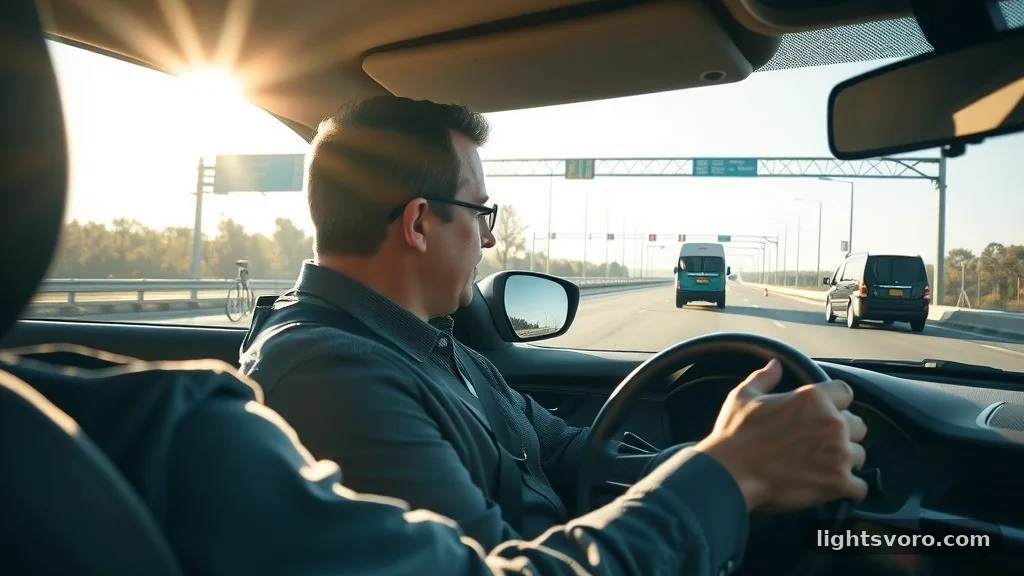
For most people in modern society, the distance of 50 miles is primarily understood through the lens of automotive travel. When you ask how long it takes to cover this span, the answer is rarely a fixed number.
Under ideal conditions on a high-speed interstate highway, traveling at a steady 65 to 70 miles per hour, you can expect to reach your destination in approximately 45 to 50 minutes. This makes 50 miles a common threshold for a “super-commute” or a regional day trip.
However, the reality of the road rarely mirrors these perfect conditions. In dense urban environments, 50 miles can easily transform into a two-hour ordeal. Traffic congestion, construction zones, and stop-and-go patterns drastically alter the time expenditure.
If you are navigating through a major metropolitan area during rush hour, the distance between your starting point and your goal remains the same on a map, but the temporal cost doubles or triples. Understanding this distinction is vital for planning, as it highlights that distance is not just about space; it is about the infrastructure and density of the terrain you are crossing.
Visualizing a Fifty-Mile Radius
When you draw a 50-mile circle around your home, you are effectively defining your primary sphere of influence and activity. This radius encompasses your local economy, social network, and access to essential services.
For many, this 50-mile zone is the boundary of the “known world” visited on a regular basis. Within this circle, you likely know the shortcuts, the reliable gas stations, and the regional landmarks that make the journey feel routine rather than adventurous.
Visualizing this area on a map helps put the scale of your life into perspective. If you live in a sprawling megalopolis, a 50-mile radius might keep you within the same continuous urban fabric.
If you live in a rural area, however, that same 50-mile circle might encompass multiple small towns, vast agricultural fields, or significant changes in topography. This measurement acts as a scale for community engagement; it is the distance at which one might commute for a job, visit family for a weekend, or travel to access specialized healthcare or shopping, representing the outer limit of what most consider a local or regional trip.
Human-Powered Travel: Walking and Running
Transitioning from the speed of a car to the speed of the human body fundamentally changes how we perceive 50 miles. For a dedicated long-distance runner, 50 miles is an ultra-marathon distance, a feat that requires immense physical preparation and endurance.
To put this in perspective, an elite runner might cover this distance in roughly six to eight hours, while a seasoned recreational runner might take ten to twelve hours. It is an arduous task that pushes the limits of human physiology.
Walking 50 miles is an entirely different endeavor, shifting the timeframe from hours into days. An average walking pace is roughly 3 miles per hour, meaning that without accounting for sleep or extended rest, it would take nearly 17 hours of continuous walking to cover the distance. In practice, most people would break this into a two- or three-day journey.
This highlights a crucial truth about human perception: we often underestimate distance when we are accustomed to motorized transport. When you strip away the engine, 50 miles becomes a significant expedition, requiring careful planning, navigation, and physical recovery that is simply not necessary when driving.
The Metric Conversion: Kilometers and Global Standards
While the imperial system is the standard in the United States, much of the world utilizes the metric system. Converting 50 miles into kilometers provides a useful point of reference for global travelers.
Roughly speaking, 50 miles is equivalent to approximately 80.47 kilometers. This conversion is a standard question for those planning international travel or trying to understand distances in countries where road signs and maps prioritize kilometers.
Understanding this conversion is more than just a math exercise; it is about calibrating your expectations. If you are accustomed to thinking in miles, the sight of a road sign indicating 80 kilometers to your destination can feel daunting or confusing.
By internalizing that 80 kilometers is roughly the same as your familiar 50-mile benchmark, you can better manage your expectations regarding fuel consumption, travel time, and the physical effort required to move between points. It is a reminder that while the physical space remains constant, the units we use to describe it can change our psychological comfort with the distance.
Factors Influencing the Perception of Distance
The perception of distance is rarely objective. Several psychological and environmental factors influence how we “feel” about a 50-mile trip.
For instance, traveling 50 miles through a scenic, winding mountain pass often feels shorter and more engaging than driving 50 miles on a monotonous, flat, and straight highway. The level of stimulation, the complexity of the route, and the presence of familiar landmarks all play a role in how the brain processes the passage of time and space.
Furthermore, the purpose of the journey heavily dictates our patience. A 50-mile drive to a vacation destination usually feels significantly shorter than a 50-mile commute to a workplace you dislike.
This subjective experience of time—often referred to as the “time-distance paradox”—means that our internal clock is heavily influenced by our emotional state. We might ask ourselves, “How long does this take?” and receive an answer from our brain that is colored by whether we are looking forward to our arrival or dreading the return journey.
The Role of Infrastructure and Geography

The physical landscape is the ultimate arbiter of how we experience 50 miles. In a region with high-quality, limited-access highways, 50 miles is a trivial distance that can be traversed with minimal effort.
In contrast, in a region defined by rugged terrain, river crossings, or dense urban bottlenecks, the same distance can become a major barrier. Geography acts as a constraint on human movement, and our modern infrastructure is essentially an effort to shrink that distance through efficiency.
When you look at a map, you might see a straight line, but the actual travel path is rarely so simple. Topography, such as mountains or large bodies of water, often forces travelers to take indirect routes. This “circuity” means that even if the distance between two points as the crow flies is only 30 miles, the actual driving distance might be 50 miles or more.
Understanding this discrepancy is essential for anyone trying to navigate unfamiliar territory, as it explains why a destination that looks “close” on a map might require significant time to reach. For further information on how geographic data and mapping technologies shape our understanding of distance, you can consult the United States Geological Survey to learn more about how spatial data is organized.
Fifty Miles in the Context of Modern Logistics
In the world of supply chain management and logistics, 50 miles is a critical distance. It often defines the “last mile” or regional delivery zone. For local businesses, being within 50 miles of their customer base allows for same-day delivery or easy service calls.
Beyond that, the costs of fuel, labor, and vehicle wear and tear begin to escalate, often requiring a different business model. This distance is a threshold for efficiency in the modern economy.
When you order an item online, the proximity of the distribution center to your location often determines whether you receive your package in hours or days. A 50-mile radius is frequently the sweet spot for regional distribution hubs.
Understanding this helps consumers realize why some services are available in certain areas but not others. We live in a world where our desire for convenience is constantly pushing against the physical realities of distance, and 50 miles remains a significant hurdle that logistics companies must overcome every single day.
Social and Cultural Implications of Distance
The distance of 50 miles also has profound implications for social and cultural cohesion. In many rural areas, a 50-mile trip is a normal part of life, a distance people regularly travel to visit friends, attend community events, or shop.
In contrast, in dense urban environments, 50 miles might be considered a trip to another city or even a different state. This difference in perception shapes how we build communities and maintain social ties.
If your friends and family are all within 50 miles, your social life is likely centered around frequent, spontaneous interactions. Once that distance grows, the nature of those relationships changes, requiring more intentional planning and longer commitments.
This is why 50 miles is often cited as a “commuter belt” boundary; it is the distance at which people are willing to move for work while still maintaining their ties to a specific community. It is a distance that balances the need for economic opportunity with the human desire for social belonging.
Navigating the 50-Mile Threshold in Daily Life
Most of us encounter the 50-mile threshold regularly without even realizing it. Whether it is a weekend road trip, a visit to a distant relative, or a regional business meeting, this distance acts as a psychological benchmark for “travel.”
When a journey is under 50 miles, we rarely feel the need to pack a suitcase or prepare for significant travel disruptions. It feels like an extension of our local environment.
Once we cross that 50-mile mark, however, the preparation changes. We might check the weather in a different region, ensure our vehicle is in top shape, or plan for a meal stop. This shift in behavior is a testament to how we categorize distance based on perceived risk and effort.
Recognizing this threshold allows us to be more deliberate in our planning. By understanding that 50 miles is the point where a simple trip becomes an “excursion,” we can better allocate our time and energy, ensuring that we are prepared for the unique demands that even a moderate distance can impose.
Technological Aids and the Future of Distance
Technology has fundamentally altered our relationship with the 50-mile distance. GPS systems and real-time traffic updates have stripped away much of the uncertainty that used to accompany such a journey. We no longer need to study paper maps or worry about getting lost; our devices tell us exactly how long the trip will take, suggest alternative routes to avoid congestion, and even estimate our arrival time with impressive accuracy.
This reliance on technology has made 50 miles feel much shorter than it did for previous generations. We have offloaded the cognitive burden of navigation to algorithms. However, this also means we are less connected to the physical reality of the land we are crossing.
We are increasingly focused on the “time” rather than the “distance.” As we move into the future, with the potential for autonomous vehicles and improved public transit, the way we experience this 50-mile span will continue to evolve, likely becoming even more seamless and less physically demanding. Yet, the core truth remains: 50 miles is a physical reality that requires movement, energy, and a significant portion of our most valuable resource—time.
Concluding Thoughts on Spatial Awareness
Ultimately, understanding how far 50 miles is requires us to balance the objective measurement with our subjective experience. It is a distance that is simultaneously long enough to feel like a journey and short enough to be a routine part of our lives. By considering the variables—speed, infrastructure, geography, and purpose—we can better appreciate the scale of our world.
Whether you are walking, driving, or analyzing the logistics of a supply chain, 50 miles serves as a vital anchor point for human activity. It is the distance that defines our regional identity, shapes our economic possibilities, and challenges our physical endurance.
By becoming more conscious of this distance, we can navigate our lives with greater intentionality, better planning, and a deeper appreciation for the space that separates us from the people and places we value. The next time you set out on a 50-mile trip, take a moment to consider the distance not just as a line on a map, but as a meaningful span of time and effort that connects you to the wider world around you.