
Visualizing distance can be surprisingly difficult when we move beyond the immediate reach of our arms or the span of a room. When we ask, “How much is 100 feet?” we are often looking for a mental anchor—a way to translate an abstract number into a physical reality that our brains can easily grasp. Whether you are planning a landscaping project, buying outdoor lighting, or simply trying to gauge how far away an object is during a hike, understanding this specific distance is a practical skill that helps us navigate the world with greater spatial awareness.
Defining the Unit: What Makes Up 100 Feet? 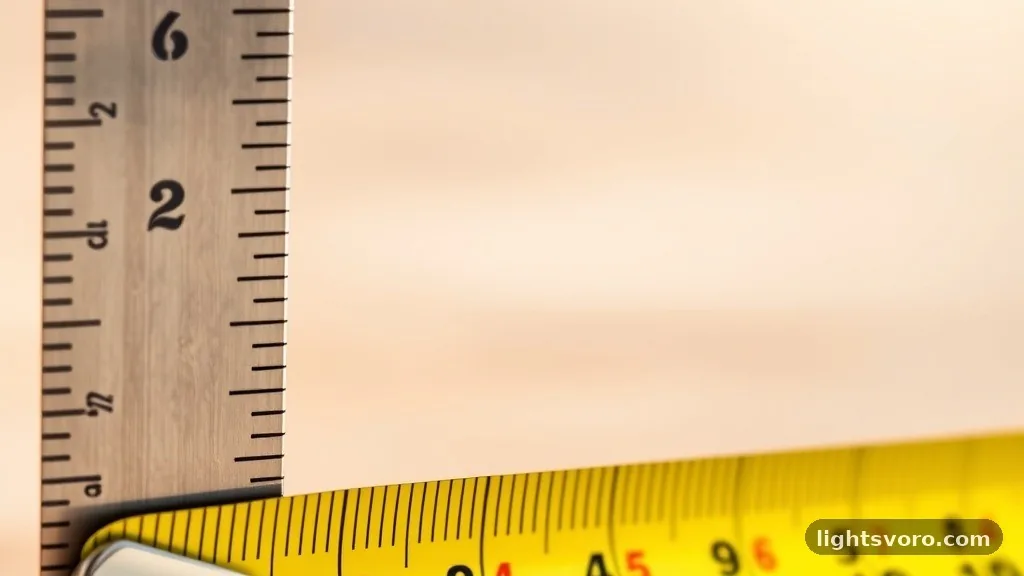
To truly understand 100 feet, we must first look at the fundamental unit of measurement involved.
A single foot is defined as 12 inches, a standard that has been used for centuries in the imperial system. When we reach the 100-foot mark, we are essentially looking at 1,200 inches. While those numbers seem large, they are surprisingly manageable when broken down into smaller, more digestible segments.
In the international system of units, 100 feet is equivalent to approximately 30.48 meters. For those who are more comfortable with the metric system, thinking in terms of meters can actually provide a clearer picture. A meter is slightly longer than a yard, and since 100 feet is roughly 33 yards, the 30-meter conversion is a very helpful shortcut.
Keeping this relationship between feet and meters in mind allows you to switch between measurement systems depending on the context of your task, whether you are reading technical manuals or navigating international travel.
Visualizing 100 Feet in Sports and Recreation
One of the most reliable ways to internalize the length of 100 feet is to look at the playing fields we encounter in daily life. For instance, a standard American football field is 360 feet long, including the end zones.
This means that 100 feet represents slightly less than one-third of the total field length. If you imagine standing on the goal line and walking toward the 33-yard line, you have covered almost exactly 100 feet.
If you are a fan of basketball, consider the length of a professional court. A regulation NBA court is 94 feet long. Therefore, 100 feet is just a few steps longer than the entire length of the court from baseline to baseline.
This comparison is particularly useful for athletes or anyone who spends time in indoor sports facilities. By anchoring your understanding to a space you have physically walked across, you can instantly estimate 100 feet in other environments with much higher accuracy.
The Human Perspective: Steps and Walking Time
How many steps does it take to cover this distance? For the average adult, a comfortable walking stride is roughly 2.5 feet.
If you are walking at a casual pace, you can estimate that you will need approximately 40 steps to cover 100 feet. If you are taking longer, more purposeful strides, that number might drop to about 30 or 35. This “step count” method is an excellent low-tech tool for measuring distance when you don’t have a tape measure handy.
Regarding the time it takes to traverse this distance, the average person walking at a moderate, steady pace will cover 100 feet in about 20 to 25 seconds. If you are in a rush and walking at a brisk pace, you might cut that time down to 15 seconds. This temporal understanding of distance is useful for planning commutes or estimating how quickly you can move between two points in a large building or park.
By internalizing these physical sensations—the number of steps and the seconds passed—you gain an intuitive sense of scale that numbers on a page cannot provide.
100 Feet in Residential and Backyard Contexts
Homeowners often encounter the need to measure 100 feet when dealing with property boundaries, fencing, or outdoor utility runs. Many suburban residential lots are deep, but they rarely exceed 100 to 150 feet in length.
If you imagine a standard rectangular backyard, a 100-foot distance often spans from the back of the house to the far fence line. If you are looking to purchase string lights for your patio, visualizing 100 feet can prevent you from buying too much or too little cord.
When installing equipment like long-range Wi-Fi extenders or heavy-duty extension cords, 100 feet is a common benchmark. It is long enough to require a voltage drop consideration for electrical cables, but short enough to be manageable with a single, high-quality outdoor-rated cord. Understanding this specific length helps you determine if you need to daisy-chain multiple items or if a single, uninterrupted run will suffice for your project.
Always consult the National Institute of Standards and Technology for precise definitions of measurements if you are performing professional-grade construction or engineering work.
Height and Verticality: How High is 100 Feet? 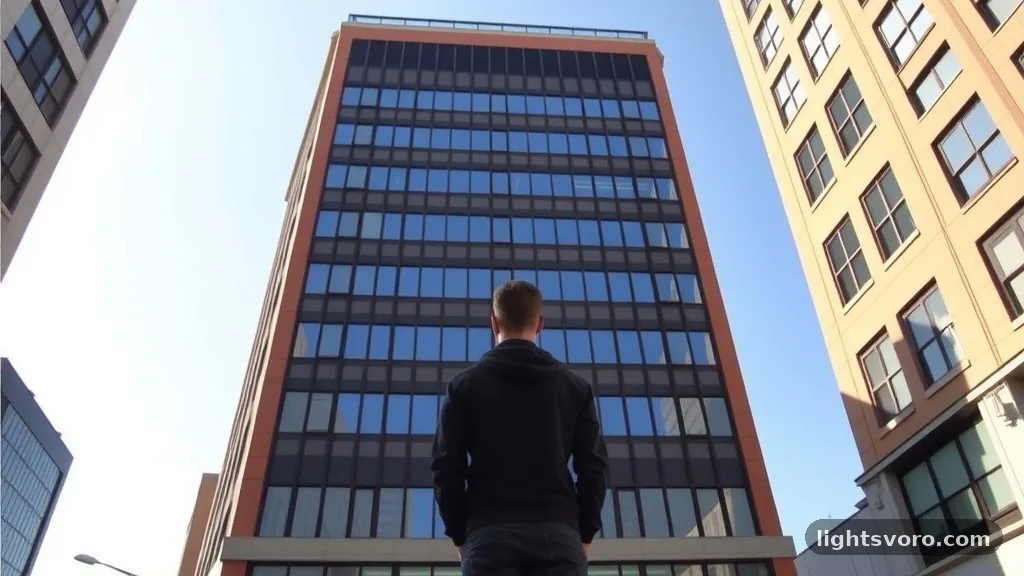
Visualizing height is often more difficult than visualizing horizontal distance because we lack the same ground-level references. A 100-foot height is roughly equivalent to a 9- or 10-story building.
If you stand at the base of a 10-story office block and look up to the roof, you are seeing a vertical distance of approximately 100 feet. This perspective is vital for safety assessments, such as understanding how far a fall might be or how high a branch is hanging in a tree.
Another way to grasp this height
Another way to grasp this height is to think about standard residential architecture. A single floor in a home, from floor to ceiling, is usually about 8 to 10 feet high. Therefore, 100 feet is like stacking 10 to 12 stories of a house on top of one another.
This vertical scale is often underestimated by people; we tend to think of 100 feet as “not that high” when looking from the ground up, but when you are at the top looking down, the reality of the distance becomes much more apparent.
Common Objects That Measure 100 Feet
When we look for common objects to use as benchmarks, we have to consider things that are consistently manufactured to specific lengths. For example, a standard professional bowling lane is about 60 feet long from the foul line to the headpin. To get to 100 feet, you would need to add another 40 feet, which is roughly the distance from the foul line to the middle of the seating area.
Another useful object is the standard semi-truck trailer. A typical trailer is 53 feet long. If you place two of these trailers end-to-end, you have a total length of 106 feet.
This is a nearly perfect visual representation of 100 feet. If you are driving on the highway and see two semi-trailers parked in a line at a rest stop, you are looking at a real-world, tangible example of what 100 feet looks like. These types of mental “prototypes” are invaluable for quick, real-time estimation in various settings.
Navigating Nature: 100 Feet in the Outdoors
In the wilderness, 100 feet is a frequent measurement used for safety and environmental regulations.
For instance, many camping regulations require that you set up your tent at least 100 feet away from lakes, streams, or other water sources to prevent contamination and protect the shoreline. Learning to pace out this distance is a practical survival skill that every hiker should master.
If you are in a forest, you can use the height of trees to gauge distance. While trees vary wildly, a mature, healthy tree in a typical forest often reaches 60 to 80 feet. If you find a particularly tall, prominent tree, it is likely close to the 100-foot mark.
By training your eyes to identify these natural markers, you can estimate distances on trails without needing a physical tool. This helps in navigating terrain, communicating with others in your party about where an object is located, and adhering to local land-use policies.
The Role of Tools in Measuring 100 Feet 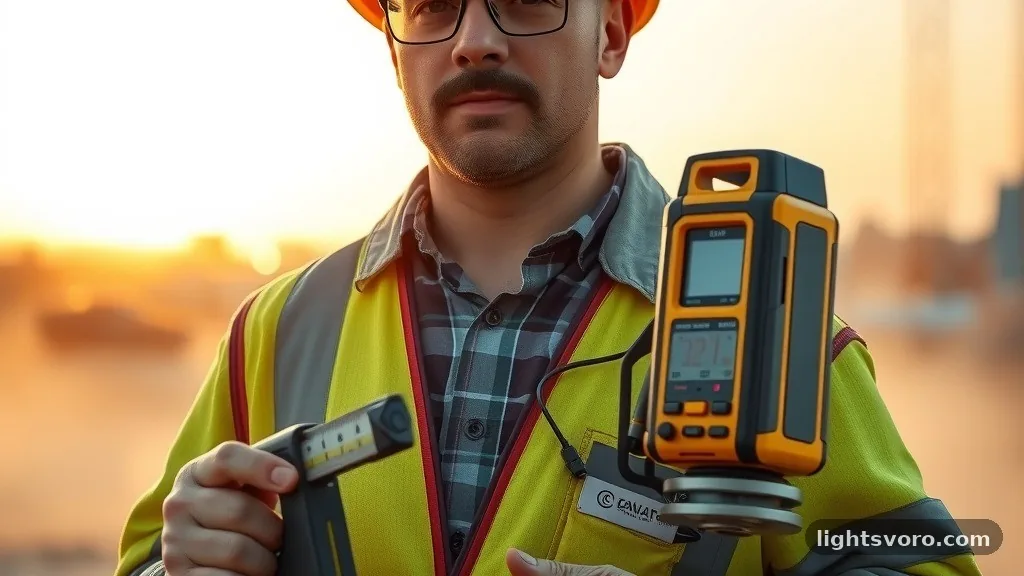
While intuition is powerful, there are times when precision is required. For these moments, we turn to the tools of the trade.
A standard 100-foot tape measure is a staple in every contractor’s toolbox. These tools are designed to be durable and accurate, often featuring a locking mechanism that allows you to extend the tape to its full length without it retracting immediately.
In the modern era, laser distance measurers have revolutionized how we handle this length. These devices use light pulses to calculate the exact distance between two points, providing a readout in seconds. Whether you are dealing with 100 feet or 1000 feet, the laser tool removes the human error associated with manual pacing or tape-measure sag.
For those who frequently need to know how much 100 feet is in a professional or DIY capacity, investing in a reliable laser measurement tool is one of the most effective ways to ensure accuracy.
Historical and Cultural Context of the Foot
The foot as a unit of measurement has a fascinating history that explains why we use it today. It is widely believed that the unit originated from the length of a human foot, though over time, it was standardized to ensure trade and construction could be conducted with consistency. The transition from a variable, body-based measurement to a fixed, standardized unit was a pivotal moment in the development of modern society.
Understanding that 100 feet is a product of this long history of standardization helps us appreciate why we still use it. While the metric system is more mathematically “clean” for science, the foot remains deeply ingrained in our culture, our architecture, and our daily vernacular. When we speak of a 100-foot distance, we are participating in a tradition of measurement that has shaped the way we design our cities and define our private spaces for generations.
Practical Applications in Modern Technology
We often interact with 100 feet in ways we don’t immediately notice, especially regarding technology and connectivity.
For example, the maximum length for a standard Ethernet cable (Cat5e or Cat6) before signal degradation occurs is 100 meters, which is roughly 328 feet. However, for many smaller-scale installations, 100-foot cables are a common commercial length. If you are wiring a home network, knowing that 100 feet is the threshold for signal stability for many types of cabling is highly relevant.
Similarly, in the world of audio-visual
Similarly, in the world of audio-visual equipment, 100 feet represents a significant distance for signal cables. Beyond this length, you often need active boosters or specialized cabling to maintain signal integrity. By being aware of how much 100 feet impacts the performance of your technology, you can avoid common pitfalls in home office or entertainment center setups.
It is a distance that sits right at the intersection of ease-of-use and technical limitation, making it a critical number to understand.
Improving Your Spatial Awareness 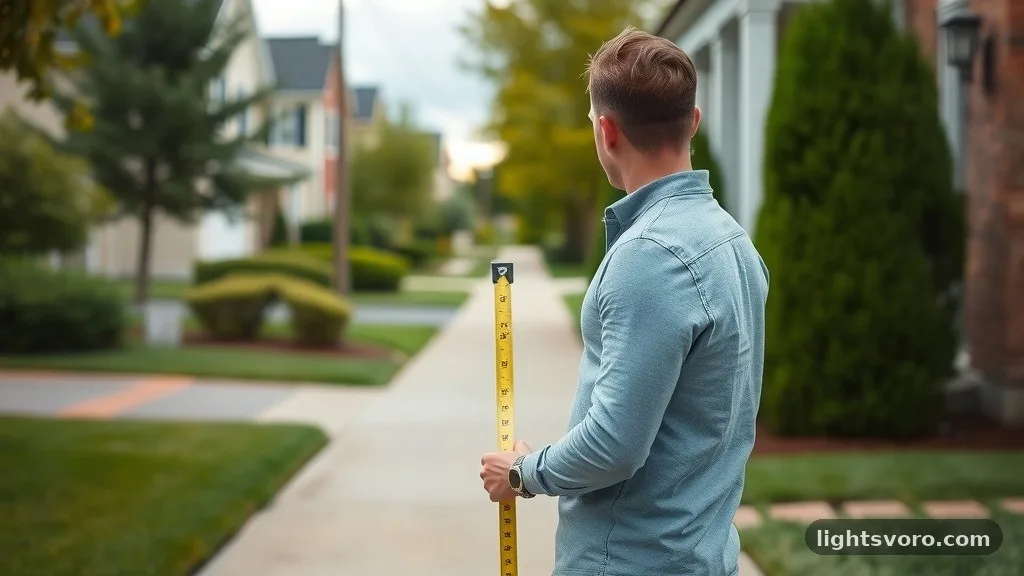
Developing an intuitive sense of distance is a journey of practice. To improve, start by guessing the distance of objects in your home or neighborhood, and then check your guess with a measuring tape or a laser tool.
You might estimate that the distance from your front door to the sidewalk is 40 feet, or that the width of the street is 30 feet. By constantly testing your assumptions, you calibrate your internal “ruler.”
Over time, these estimations become second nature. You will find that you no longer need to perform complex calculations to understand how much 100 feet is; instead, you will simply “see” it. This skill is not just about measurements; it is about being more connected to the physical world around you.
Whether you are measuring a plot of land, setting up a tent, or just curious about the scale of your environment, the ability to judge 100 feet is a hallmark of a well-developed sense of spatial intelligence.
Summary of Real-Life Estimations
To summarize, 100 feet is a distance that can be broken down into manageable chunks. It is about 30 meters, roughly 40 walking steps, and takes about 20 seconds to walk at a casual pace.
It is slightly longer than a basketball court and about one-third of a football field. It is the height of a 10-story building and the length of two semi-truck trailers.
These benchmarks provide a robust framework for visualizing the distance in almost any situation. By keeping a few of these examples in mind—the sports field, the semi-truck, the 10-story building—you can quickly estimate the length of 100 feet whether you are indoors or out. As you continue to practice your estimation skills, you will find that distance becomes less of an abstract concept and more of a practical, intuitive tool for navigating your daily life.
The Importance of Precision in Measurement
While estimation is excellent for day-to-day tasks, there are scenarios where precision is non-negotiable.
If you are dealing with legal property lines, structural engineering, or high-speed data transmission, the difference between 100 feet and 101 feet can be significant. In these cases, always rely on professional-grade measuring equipment and, when necessary, professional surveyors or contractors.
The beauty of understanding 100 feet in the way we have explored is that it bridges the gap between the casual observer and the informed professional. You can use your intuitive sense of scale to quickly identify if a plan or a space “looks right,” and then follow up with the necessary precision to confirm your suspicions. This combination of intuition and accuracy is the hallmark of effective spatial planning.
Future Trends in Measurement Technology
As we move forward, the way we perceive and measure distance will continue to evolve.
Augmented reality (AR) apps are already being developed that can overlay measurements onto our physical environment through our smartphones. Imagine pointing your camera at an empty lot and having the phone display a virtual line showing exactly where the 100-foot mark is.
These technological advancements will likely make the task of measuring distances like 100 feet even more accessible to the average person. However, even with the best technology, having a mental grasp of the distance remains a valuable human skill. It allows us to function independently of our devices and maintain a deep, tactile connection to the spaces we inhabit.
Whether you are using a high-tech AR tool or simply your own two feet, the goal remains the same: to understand the world around us with clarity and confidence.
Final Reflections on Distance
In our fast-paced world, we often overlook the importance of understanding the physical dimensions of our environment. We rely on GPS coordinates and digital maps to tell us where we are and how far we have to go. Yet, there is a profound satisfaction in being able to look at a distance and know, with a high degree of confidence, exactly how long it is.
100 feet is a perfect starting
100 feet is a perfect starting point for this exploration. It is a distance that is large enough to be significant but small enough to be understood. By internalizing this measurement, you are not just learning a number; you are learning to read the world.
You are becoming more aware of your surroundings, more capable in your DIY projects, and more connected to the physical reality of the space you occupy. Keep practicing, keep observing, and you will find that the world becomes a much more measurable and comfortable place to live.