
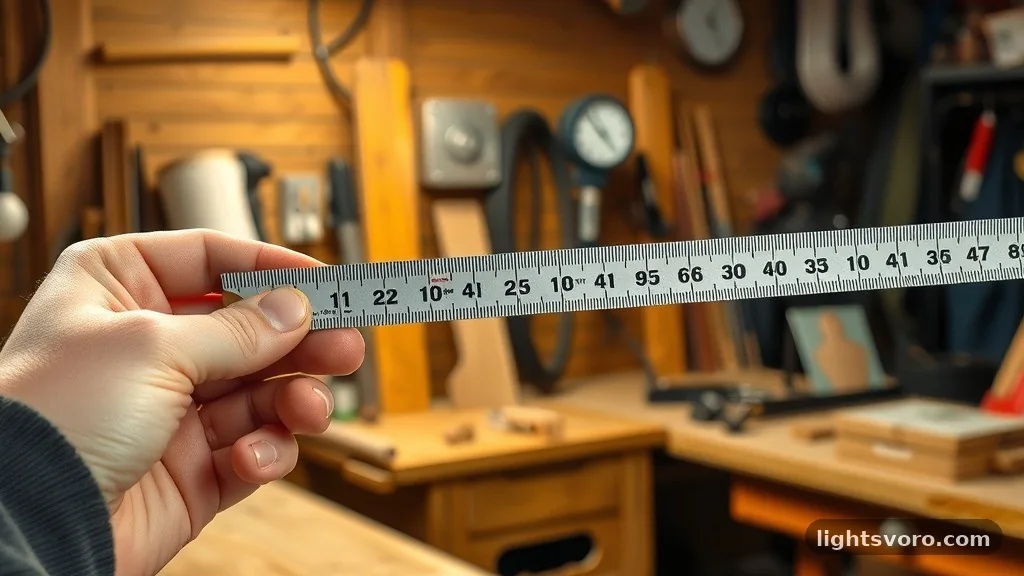
Visualizing specific measurements can be surprisingly difficult without a reference point, especially when trying to gauge a length like ten inches. Whether you are measuring for a DIY project, checking if a kitchen appliance will fit on a counter, or simply satisfying a curiosity about spatial dimensions, having a mental library of items that match this length is incredibly useful. Understanding the scale of ten inches helps bridge the gap between abstract numbers and the physical world, allowing you to estimate dimensions quickly and accurately without reaching for a tape measure every single time.
Understanding the Ten-Inch Metric

Before diving into specific objects, it is important to ground the measurement in standard units. Ten inches is a common length in the American system, falling just short of a full foot, which is twelve inches.
If you are working in metric, ten inches is equivalent to exactly 25.4 centimeters. Because this length is so close to a standard foot, people often overestimate it; a ten-inch item will feel slightly smaller than a standard ruler, which is twelve inches long.
When you hold your hand out, a typical adult hand span from the tip of the thumb to the tip of the pinky finger when fully stretched is often close to eight or nine inches. Therefore, ten inches is just slightly longer than a wide hand spread.
Having this baseline allows you to use your own body as a rough, non-standard measurement tool in a pinch. By understanding that ten inches is roughly 25 centimeters or about 83% of a foot, you can navigate various sizing scenarios with much greater confidence.
The Standard Paper Towel Roll
One of the most reliable ways to visualize ten inches is to look at a standard paper towel roll. While the exact width of paper towels can vary slightly by brand, the cardboard core and the width of the sheet itself are almost universally right around ten to eleven inches. If you are standing in a kitchen, grabbing a roll of paper towels is perhaps the fastest way to get a physical sense of this length.
It is helpful to consider that the height of a standard roll is often closer to eleven inches, but the internal core or the width of the rolled-up paper itself often compresses to right at that ten-inch mark. This is a brilliant reference because almost every home in the country has this item readily available. If you need to estimate a space—such as the depth of a shelf or the width of a box—holding a roll of paper towels up to it will give you a very accurate “ten-inch” gauge that you can trust for quick estimation.
Standard Letter-Sized Paper and Notebooks
While a standard piece of American letter paper is 8.5 by 11 inches, the shorter side is 8.5 inches and the longer side is 11 inches. This means that ten inches is exactly one and a half inches longer than the short side of a piece of printer paper. If you are looking at a standard spiral-bound notebook, the physical cover usually measures about 10.5 inches in height.
This makes notebooks and tablets excellent proxies for ten-inch measurements. Many modern tablets, especially those with screens measured diagonally, have a physical chassis length that hovers right around ten inches. When you look at an iPad or a similar Android device, the long side is often just shy of ten inches, providing a very clean, flat surface that you can use to check the scale of other items in your environment.
The Length of a Standard Dinner Plate
If you are looking at your kitchen cupboard, you will find that a standard dinner plate typically has a diameter of about 10 to 10.5 inches. This is a universal standard in the culinary world because it provides enough surface area for a main course without being overly cumbersome. Because this object is so common, it serves as a perfect mental anchor for the measurement.
When you are trying to estimate whether a specific item will fit into a storage space or onto a shelf, visualizing a dinner plate is an effective technique. If the space can comfortably accommodate a dinner plate, it is almost certainly at least ten inches wide. This helps in organizing cabinets or planning how to pack items into a suitcase or a box, as the plate acts as a physical “template” for what ten inches looks like in a flat, circular format.
Legal Envelopes and Correspondence
Standard business envelopes, often called #10 envelopes, are specifically designed to be 9.5 inches long. This is an incredibly useful reference point because the name itself—the #10 envelope—is almost a mnemonic device for the length. While it is technically half an inch short of ten inches, it is close enough to be a highly effective proxy for most non-scientific purposes.
If you have a stack of mail on your desk, you are likely looking at objects that are almost exactly ten inches long. This is a common measurement in the office supply world because it is designed to hold a standard sheet of paper folded into thirds. By keeping this in mind, you can use your outgoing mail as a quick visual reference whenever you are trying to guess the size of an object or a gap in your workspace.
How to Measure Without a Ruler
There are many instances where you might find yourself needing to know if something is ten inches long but you do not have a ruler or tape measure handy. Fortunately, there are several “hacks” using everyday items or your own body to get a surprisingly accurate reading. First, consider the length of your own foot.
Most adults have feet that are between nine and eleven inches long. If you wear a size 9 or 10 shoe, your foot is a near-perfect ruler for this specific measurement.
Another method involves using your hand. As mentioned earlier, a wide spread of the fingers can approximate the length. Additionally, the distance from your wrist to the tip of your middle finger is often close to seven or eight inches.
By adding the length of your thumb, you can easily reach the ten-inch mark. Finally, using common currency can help; a standard US dollar bill is 6.14 inches long. If you place a dollar bill down and add about two-thirds of another one, you have reached your ten-inch target.
Consumer Electronics and Tablets
In the world of technology, “ten inches” is a very common screen size category for tablets. When a manufacturer markets a “10-inch tablet,” they are referring to the diagonal measurement of the screen.
However, the actual physical body of the device is usually slightly larger to account for the bezels. This means the actual length of the tablet is often exactly ten inches.
This is a fantastic reference for the modern age. If you own a mid-sized tablet, you are carrying around a device that, in its longest dimension, is likely within a fraction of an inch of ten inches.
When you need to gauge a space—like a drawer or a bag compartment—you can simply imagine placing your tablet inside. If it fits with a little room to spare, you know you are dealing with a space that exceeds the ten-inch mark.
Kitchen Utensils and Tools
Many kitchen tools are designed with ergonomic lengths that fall right into the ten-inch range. Think about a standard chef’s knife; while the blade itself might be eight inches, the handle adds another two to three inches, bringing the total length to roughly ten or eleven inches. Similarly, many wooden spoons, spatulas, and whisks are manufactured with handles that are ten inches long to keep the user’s hand away from the heat of the stove.
If you are a cook, your kitchen drawer is essentially a collection of ten-inch reference tools. By picking up a standard spatula, you have a physical object that allows you to gauge dimensions instantly.
This is particularly useful when you are shopping for kitchen organizers or trying to decide if a new appliance will fit on your countertop. The consistency of these tool sizes makes them some of the most reliable references you can have.
Children’s Shoe Sizes
If you have children or have ever shopped for kids’ footwear, you might have noticed how quickly their feet grow. A standard toddler or young child’s shoe is often in the range of seven to ten inches. Specifically, a child’s size 10 to 12 shoe is typically right around that ten-inch mark in terms of the sole length.
While this might seem like a niche reference, it is actually quite helpful for parents or those who work with children. If you are trying to visualize ten inches, looking at the shoes of a school-aged child provides a very tangible, real-world example. It is a measurement that is consistent and easy to visualize, especially if you have children’s shoes lying around the house or the entryway.
The Width of a Standard Computer Keyboard

If you are reading this on a computer, you likely have a keyboard within reach. A standard full-sized computer keyboard, including the number pad, is usually around 17 to 18 inches long.
However, if you look at a “tenkeyless” keyboard—a popular style for gamers and minimalist office setups—the length is often right around 14 inches. If you look at the width of the alphanumeric section alone, it is surprisingly close to ten inches.
Beyond the keyboard, consider the mousepad. A standard small or medium-sized mousepad is often square-shaped, measuring about 9 to 10 inches on each side.
This provides a very consistent reference point for anyone working in an office environment. Because you interact with these objects every single day, your brain becomes naturally attuned to their size, making them excellent benchmarks for estimating other items.
Small Household Items and Decor
Looking around a living room, there are numerous items that fall into the ten-inch category. A standard decorative throw pillow, while often larger, frequently comes in a 12-inch size, but smaller accent pillows can easily be 10 inches. Similarly, many medium-sized picture frames, specifically those designed for 8×10 photos, have an outer frame dimension that is right around 10 inches on the shorter side.
These items are useful because they are static. Unlike a tool that you move around, these decor pieces occupy specific spaces on walls or furniture.
If you are trying to envision if a new piece of art will fit on a wall or if a lamp will fit on a side table, using the dimensions of your existing picture frames as a guide is a highly effective way to visualize the scale. It turns the process of measuring into a simple comparison of “is this bigger or smaller than that frame?”
The Scale of Handheld Tools
Many handheld tools, such as screwdrivers or small wrenches, are manufactured with lengths that hover around ten inches. A standard screwdriver with a six-inch shaft and a four-inch handle is exactly ten inches long. This is a common design because it provides the perfect amount of leverage for most household tasks while remaining small enough to fit in a standard toolbox.
If you are a DIY enthusiast, your toolbox is a goldmine of ten-inch references. Whenever you need to estimate a length, simply grabbing a standard screwdriver provides an immediate physical standard.
This is much more reliable than trying to guess based on memory. By keeping a few of these common tools in mind, you can quickly assess the size of almost any space or item you encounter during your home improvement projects.
Comparison with Other Common Lengths
To truly understand ten inches, it helps to compare it to other common measurements. For instance, six inches is roughly the length of a standard smartphone.
Twelve inches is the length of a standard ruler or a foot-long sandwich. Because ten inches sits right between these two common benchmarks, it is easy to place it on a mental scale.
If you know your phone is about six inches, you can visualize ten inches as your phone plus about two-thirds of its length again. If you know a foot-long sandwich is twelve inches, you can visualize ten inches as the sandwich with a small bite taken off the end. These relative comparisons are often more intuitive than trying to think in terms of centimeters or fractions of an inch, as they allow you to build on the knowledge you already have about the objects you encounter daily.
The Importance of Spatial Awareness
Developing a sense of how big ten inches is contributes to your overall spatial awareness. This skill is useful in more ways than just measuring; it helps you navigate physical environments, pack efficiently, and design spaces that are functional. When you can look at a gap between two pieces of furniture and immediately estimate whether it is ten inches or not, you are demonstrating a high level of spatial reasoning.
This ability is particularly useful when shopping for furniture or home decor online. When you see a description that lists an item as ten inches, you won’t have to guess if it will fit on your shelf; you will have a mental image ready. By consciously practicing these comparisons—checking your hand, your kitchen tools, and your tech—you can refine this sense until it becomes second nature, making your everyday interactions with the physical world much smoother and more efficient.
Final Practical Applications
Whether you are measuring for a new shelf, checking the fit of a drawer organizer, or simply curious about the dimensions of the world around you, having a list of ten-inch items is a powerful tool. The next time you find yourself without a ruler, remember the paper towel roll, your tablet, your dinner plate, or your favorite screwdriver. These items are more than just clutter; they are reliable, standardized references that can help you measure the world with accuracy.
By internalizing these comparisons, you eliminate the frustration of guessing. You gain the ability to estimate sizes on the fly, which is a subtle but significant advantage in everything from cooking and cleaning to interior design and home repair. The world is full of standardized items, and once you learn to see them as units of measurement, you will find that you are never truly without a way to gauge the length of the objects around you.
The Role of Standardization in Measurement
It is worth noting that the reason we have so many objects that fit the ten-inch mark is due to the history of industrial standardization. Manufacturers create items like plates, envelopes, and keyboards to fit within specific parameters that are ergonomically and logistically sound.
This mass production creates a consistent physical environment for all of us. When you see a “standard” item, you are seeing the result of decades of design choices aimed at utility and ease of use.
This standardization is what allows us to share a common language of measurement. Because we all use similar plates and paper, we all have the same internal reference for what “ten inches” feels like.
This shared experience makes communication easier; when someone mentions a ten-inch item, you likely have a very similar mental image to theirs. Recognizing this can help you communicate more effectively when discussing projects or planning spaces with others, as you are likely working from the same set of visual benchmarks.
Adapting to Different Environments
While the objects mentioned here—like tablets, plates, and notebooks—are common in many homes, your personal collection of reference items might be different. Perhaps you have a specific tool you use for your job, or a hobby that involves items of a consistent size. The key to mastering this is to identify the items in your own life that you handle frequently and verify their length.
If you work in a warehouse, maybe there is a specific box size that is ten inches. If you are a gardener, perhaps your favorite trowel is the perfect benchmark.
By identifying these personal references, you can create a custom set of tools that help you measure the world in a way that is unique to your lifestyle. The more you consciously identify these lengths, the better your internal “ruler” will become, providing you with a lifelong skill for spatial estimation.
Summary of Key References
To recap, ten inches is a highly versatile measurement that appears in many facets of daily life. From the kitchen with its dinner plates and paper towel rolls, to the office with its tablets and business envelopes, to the toolbox with its screwdrivers, you are surrounded by items that can help you visualize this specific length. Understanding the relationship between these items and the standard measurement helps you navigate physical space with ease.
By keeping these 18 examples in mind, you have a robust toolkit for estimation. You no longer need to panic when you lose your tape measure or find yourself needing to know a dimension on the spot.
Simply look around, find one of these common objects, and use it as your guide. It is a simple, effective way to stay grounded in the physical world and ensure that your projects, organization, and daily tasks are executed with the precision you need.
Continuing to Refine Your Estimation Skills
As you move forward, try to be more mindful of the sizes of the objects you use. When you pick up a new item, take a second to guess its length before checking it against a known reference.
This simple game of estimation will sharpen your spatial awareness over time. You will find that you start to naturally categorize objects in your mind by their dimensions, making you more efficient at everything you do.
Remember that while ten inches is a specific number, it is also a part of a larger system of measurement. By understanding how it relates to feet, centimeters, and other common lengths, you deepen your understanding of how the world is constructed.
Whether you are a professional contractor or someone who just enjoys DIY projects at home, these skills are invaluable. Keep observing, keep measuring, and keep building that mental library of sizes, and you will find that the physical world becomes much easier to navigate and understand.
Final Observations on Measurement
Measuring is more than just reading numbers off a tool; it is about understanding the volume and scale of the space you inhabit. By taking the time to learn these everyday comparisons, you are taking a step toward being more in tune with your surroundings. Ten inches is just one of many measurements, but it is a foundational one that appears in enough places to make it worth knowing well.
As you continue to apply these methods, you will find that your need for physical measuring tools decreases. You will move through your day with a heightened sense of proportion, able to judge the fit of items and the scale of spaces with a glance. This is the mark of someone who is truly comfortable in their environment, and it is a skill that will serve you well in countless situations for years to come.