

Visualizing dimensions without a measuring tool at hand can be surprisingly difficult, yet understanding the scale of three inches is a useful skill for everyday life. Whether you are shopping for hardware, planning a small craft project, or simply trying to estimate the size of an object in a photograph, having a mental benchmark for this specific measurement helps bridge the gap between abstract numbers and physical reality.
Three inches is a common length that sits right in the sweet spot of being small enough to be portable but large enough to be easily handled. By examining a variety of common items that share these dimensions, you can develop an intuitive sense of scale that serves you in countless practical situations.
1. The Standard USB Flash Drive
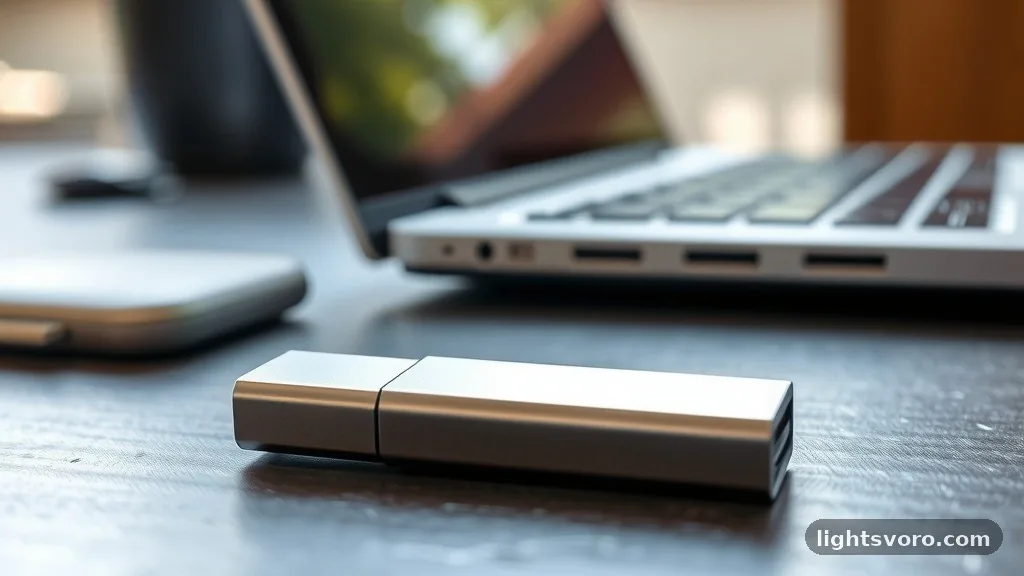
One of the most ubiquitous objects in the modern office or school environment is the humble USB flash drive. While designs vary wildly, the classic, rectangular stick style—especially those with a protective cap—frequently measures right around three inches in length. This size is intentional; it is large enough to be easily gripped by your thumb and forefinger, preventing it from being misplaced, yet small enough to slide into a pocket or laptop bag without creating a bulge.
When you look at a standard USB drive, you are seeing a perfect reference point for three inches. The metal connector itself accounts for about half an inch, while the plastic casing provides the remaining two and a half inches of length. Because these drives are so common, you likely have one sitting in a drawer or plugged into a computer nearby right now.
Using a USB stick as a mental anchor allows you to estimate other objects quickly. If you see a small item and wonder if it is three inches, simply imagine laying that flash drive next to it.
If they match up, you have your answer. This is an essential trick for anyone who frequently deals with small hardware or electronics.
2. A Standard Large Paperclip
While small paperclips are ubiquitous, the “jumbo” or “large” variety is a fantastic reference for smaller measurements. A standard large paperclip typically measures exactly two inches, but the slightly longer, specialized heavy-duty office clips often reach the three-inch mark. These larger fasteners are designed to hold thick stacks of paper together, requiring extra length to wrap around the material securely.
If you happen to have a box of office supplies on your desk, pull out one of the larger clips. By holding it up against a surface, you can see how three inches occupies space. It is a length that feels substantial in the hand but remains lightweight.
This specific size is also common for metal bookmarks or specialty clips used in scrapbooking. Because they are thin and made of wire, they provide a very clean visual of the length without the bulk of plastic or wood, making them an excellent tool for gauging the precise distance of three inches without any visual clutter.
3. A Standard Box of Matches
The classic kitchen matchbox is perhaps one of the most reliable, time-tested references for three inches. Most standard-sized matchboxes, the kind you might find in a utility drawer for lighting candles or a grill, are designed to fit the length of the matches themselves. These matches are almost universally three inches long to ensure they provide enough distance between the burning flame and your fingers.
The box that houses them is usually just a hair over three inches to accommodate the match heads. When you hold a matchbox, you are holding a physical embodiment of this measurement. Because the box has a distinct rectangular shape, it also helps you visualize width and depth alongside the length.
If you ever find yourself needing to estimate a three-inch gap, visualize a matchbox lying on its side. It is a highly effective, low-tech way to verify size without needing a tape measure or a ruler. The consistency of matchbox manufacturing over the decades makes this an enduring reference point that you can rely on anywhere in the world.
4. The Diameter of a Large Lemon or Lime
Nature provides its own set of measurements, though they are rarely as precise as manufactured goods. However, a large lemon or a particularly plump lime often measures roughly three inches in diameter. When you are at the grocery store and trying to estimate size, produce is a great way to practice your spatial awareness.
To visualize three inches using fruit, imagine the width of a standard lemon. If you were to slice it in half, the circular cross-section would span about three inches across. This is a helpful comparison because it allows you to visualize the measurement in a circular format rather than just a straight line.
Many people find it easier to estimate the “width” of a three-inch object when they compare it to something spherical or cylindrical. If you are ever trying to determine if a hole or a container opening is three inches, picture a large lemon fitting snugly inside. If the lemon would fit with just a little bit of wiggle room, you are likely looking at a measurement very close to three inches.
5. A Standard Credit Card (Width)
While we often think of credit cards in terms of their length, their width is a very specific, standardized measurement. A standard credit card is approximately 2.125 inches wide, which is close to two inches. However, if you include the space occupied by a typical protective plastic sleeve or a thick silicone phone wallet, the total width often reaches almost exactly three inches.
This is a clever way to gauge size because most people carry a credit card with them at all times. If you are out and about and need to estimate a three-inch length, pull out your card. While the card itself is a bit short of three inches, adding the width of your thumb or a small margin of error will get you remarkably close to that three-inch mark.
This is a “pocket-sized” ruler that you don’t even have to carry separately. By becoming comfortable with the dimensions of the items already in your wallet, you turn yourself into a walking, talking measuring device, capable of estimating small distances with surprising accuracy.
6. A Large Rubber Eraser
The rectangular pink erasers used in schools and offices are iconic, and the standard size is almost always three inches long. These blocks are designed to be gripped comfortably by a child’s hand, and three inches provides the perfect surface area for erasing pencil marks without being so long that the eraser becomes prone to snapping in half.
If you look at the geometry of a standard pink eraser, you see a long, rectangular prism. Because it is a solid, opaque object, it is very easy to place against other items to compare lengths. If you have children, you likely have one of these in a school supply bin.
Pick it up and feel the weight and the span of it. The three-inch length is perfectly balanced against the width of the eraser.
Because these items are so common, they are perhaps the most accessible reference for three inches in a home environment. You can use them to measure everything from the depth of a shelf to the width of a picture frame.
7. A Standard Pocket Knife
Many pocket knives, especially the classic “Swiss Army” style or simple folding blades, are designed with a three-inch handle. This length is the gold standard for pocket tools because it allows for a secure, four-finger grip while remaining compact enough to sit comfortably in a pocket or on a keychain.
When you look at a closed folding knife, you are looking at a very sturdy, reliable three-inch reference. Because these tools are often made of metal and wood or high-density plastic, they feel substantial. When you hold one, you can feel the exact span of three inches in your palm.
This is an excellent way to internalize the measurement because it involves a physical, tactile experience. Having a sense of how three inches feels in your hand makes it much easier to estimate that same distance when you are looking at objects across a room. It transforms a dry measurement into a physical sensation that you can recall at will.
8. The Width of a Hand (Across the Knuckles)
One of the most useful ways to measure things is to use your own body. For many adults, the width of their hand across the knuckles (excluding the thumb) is very close to three inches. This is a highly variable measurement depending on the individual, so it is important to calibrate this against a ruler once to see how close your hand is to this standard.
Once you know your own hand’s measurement, you have a permanent, portable ruler. If your knuckles span three inches, you can simply place your hand against any object to get an instant, fairly accurate reading. This is particularly useful for DIY tasks where you need a quick estimate and don’t want to go digging for a tape measure.
For example, if you are checking if a piece of wood will fit into a gap or if a decorative item will look right on a mantle, just hold your hand up. It is a natural, intuitive way to interact with your environment. Just remember that this is a personal reference; if your hand is larger or smaller, you will need to adjust your mental estimate accordingly.
9. A Standard Battery (AA or C)
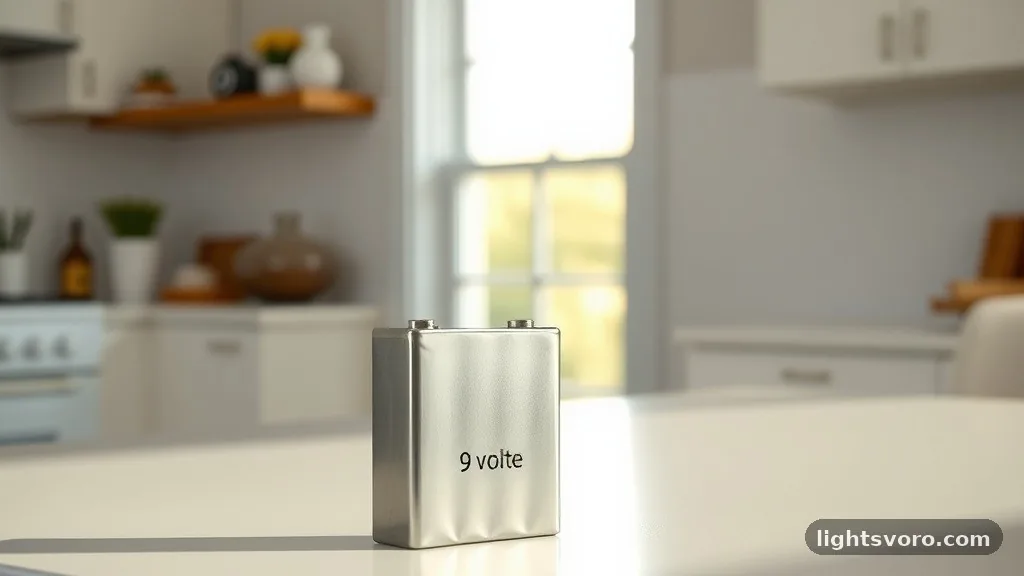
Battery sizes are standardized, and while they vary in width, their lengths are fixed. An AA battery is approximately two inches long, but a C cell battery is just over two inches, and a D cell battery is roughly 2.4 inches. Wait—what about the three-inch mark? If you look at a standard 9-volt battery, you will find that it is almost exactly two inches tall, but when you consider the battery clips or the casing, you get very close to three inches.
Alternatively, consider the length of a standard ballpoint pen cap, which is often right around three inches. By using common household items like batteries and stationary, you can build a library of “reference objects.” If you know that a D-cell is a bit over two inches, you know that three inches is just a bit longer than that.
This comparative thinking is the key to mastering spatial estimation. You don’t need a ruler for every single task if you can build a mental map of how these common objects relate to one another in terms of size.
10. A Standard Tea Bag
Have you ever noticed the size of a standard tea bag? Most rectangular tea bags, once they are filled with tea leaves and sealed, measure about three inches in length. This size is optimized for dipping into a standard mug; it provides enough surface area for the water to circulate through the leaves while being small enough to fit into a tea box or a travel packet.
This is a surprisingly useful reference point for anyone who spends time in the kitchen. If you need to estimate a three-inch distance while cooking or organizing your pantry, just think of a tea bag. The paper material is lightweight and flexible, so it doesn’t take up much space, but its length is consistent across almost every brand.
It is a subtle, everyday object that you might overlook, but once you identify it as a three-inch marker, you will find yourself using it as a mental shortcut frequently. It is one of those small, domestic details that makes measuring your environment much simpler.
11. Understanding the Importance of Three-Inch Measurements
Why does knowing what three inches looks like matter so much? In many professional and hobbyist contexts, three inches is a critical threshold. In carpentry, for example, a three-inch screw is a common length for fastening two-by-fours, which are actually 1.5 inches thick. Driving two of these together requires a fastener that can penetrate through the first board and deep into the second, and a three-inch screw is the standard choice.
Beyond construction, three inches is the standard diameter for many household items, such as the opening of a standard pipe or the width of a typical drawer pull. Understanding this measurement allows you to visualize how items will fit into your space. If you are buying hardware, knowing the difference between two inches and three inches can save you a trip to the store.
It allows you to visualize the scale of furniture, the placement of art on a wall, and even the size of small containers for organization. When you have a firm grasp of this measurement, you become more confident in your ability to plan, build, and decorate your home without constantly relying on a tape measure.
12. Visualizing Three Inches in Diameter
When we talk about three inches, we often think of length, but diameter is equally important. Think about the size of a standard soda can. A soda can has a diameter of approximately 2.6 inches. This means that three inches is just a tiny bit wider than a standard can of soda. This is a very helpful mental comparison. If you are looking at a pipe, a vase, or a hole in a wall and you wonder if it is three inches wide, visualize a soda can. If the object is slightly wider than the can, you are likely looking at a three-inch diameter.
This type of visualization is essential for spatial reasoning. By using a soda can as a “proxy” for three inches, you can quickly assess the dimensions of cylindrical objects in your environment.
It takes the guesswork out of the equation and gives you a concrete, physical benchmark to compare against. Whether you are trying to fit a piece of decor into a nook or trying to find a replacement part for a machine, this simple comparison provides a reliable starting point.
13. The Scale of Small Electronics
In the world of consumer electronics, three inches is a common dimension for components. For example, many small portable speakers are roughly three inches in diameter or length. This size is perfect for portability, as it fits easily in a cupholder or a side pocket of a backpack. When you see these devices, notice how they feel in your hand. That “three-inch” feeling is a great reference for your internal ruler.
Furthermore, many small screen devices, such as older digital cameras or handheld gaming consoles, often featured screens that were measured diagonally at around three inches. While modern smartphones have grown much larger, that three-inch diagonal measurement is still a classic size for small displays.
By observing the scale of these devices, you can refine your ability to judge small distances. Electronics are excellent references because they are manufactured with high precision, ensuring that the three-inch measurement is consistent across thousands of units.
14. Three Inches in the World of Stationery
Stationery lovers often deal with specific sizes, and three inches is a recurring theme. Many sticky note pads, particularly the square variety, are three inches by three inches. This is one of the most common sizes for office supplies, and it is a perfect square reference for your spatial awareness.
If you work in an office or have a home desk, you almost certainly have a stack of these notes nearby. A three-inch square is a fantastic visual aid because it gives you both length and width. When you look at that square, you can see exactly how much space three inches occupies in two dimensions.
This is much more helpful than a simple line because it allows you to gauge area. If you are trying to figure out if an object will fit on a shelf, visualizing the three-inch footprint of a sticky note can help you determine the available space quickly and accurately.
15. Household Hardware and Fasteners
Hardware stores are filled with items that rely on the three-inch measurement. Bolts, nails, and brackets are often sold in three-inch lengths because this size is a standard increment in construction. When you visit a hardware store, take a look at the bins of three-inch nails or screws. They are substantial pieces of metal, and holding one in your hand gives you a very clear sense of that length.
Because hardware is designed to be functional and durable, it is a great reference for understanding how three inches translates into strength and utility. A three-inch bolt is long enough to provide a secure hold but short enough to be managed easily.
By familiarizing yourself with the hardware you use in your projects, you gain a better understanding of the scale of your work. This is particularly useful for DIY enthusiasts who want to be more self-sufficient and capable of handling small home repairs without needing professional assistance.
16. Nature and Garden Measurements
Gardeners often use three inches as a guide for planting bulbs or spacing seeds. Many seed packets will instruct you to plant a seed at a certain depth or space them a certain distance apart. Three inches is a common recommendation for the spacing of small plants, as it allows for proper airflow and root development.
If you have a garden, you can use a small stick or a trowel handle to mark out three-inch intervals in the soil. This is a practical, hands-on way to internalize the measurement. As you work in the garden, you will become accustomed to how much space three inches takes up on the ground.
This is a different kind of spatial reasoning than looking at a ruler; it is about feeling the distance through your actions. Over time, you won’t need to measure—you will just “know” how far apart to plant your seeds. This is the essence of developing a “good eye” for measurements.
17. Common Items in the Kitchen
The kitchen is a treasure trove of three-inch objects. Beyond the tea bag and the lemon, consider the diameter of a standard measuring cup or the length of a small paring knife blade. Many kitchen tools are designed with ergonomics in mind, and three inches is a comfortable length for many handles and small blades.
When you are preparing food, you are constantly making spatial judgments. Is this piece of vegetable small enough? Will this container fit in the fridge?
By identifying the three-inch objects in your kitchen, you can make these decisions faster. If you know that your paring knife blade is three inches, you can use it to estimate the size of anything you are cutting.
This turns your kitchen tools into a set of measurement aids, making your cooking process more efficient and intuitive. It is about making your tools work for you in more ways than one.
18. Why Consistent References Matter
Ultimately, the goal of identifying 18 things that are three inches long is to build a robust mental catalog. When you have a variety of objects in your memory—a USB drive, a matchbox, a sticky note, a lemon—you are never truly without a way to measure. You can gauge the size of a gap, the length of an item, or the width of a space by calling upon one of these references.
This skill is about more than just convenience; it is about connecting with the physical world in a more deliberate way. When you stop seeing the world as a collection of vague shapes and start seeing it as a series of measurable dimensions, you become more observant. You notice the scale of things around you, you understand how objects interact with your space, and you gain confidence in your ability to manipulate your environment.
Whether you are hanging a picture, building a shelf, or just trying to estimate if a package will fit in your mailbox, these three-inch references are your secret weapon. By internalizing these 18 examples, you have equipped yourself with a versatile, reliable, and always-available set of tools for navigating the dimensions of your daily life.