

Visualizing a distance of 30 meters can be surprisingly difficult without a frame of reference. Whether you are planning a renovation, calculating athletic distances, or simply trying to understand the scale of a physical space, this measurement sits in a strange middle ground: it is too long to be intuitive like a single meter, yet not quite long enough to be measured in kilometers. Understanding how long 30 meters is requires breaking it down into relatable objects, architectural footprints, and familiar athletic environments.
To provide a quick conversion, 30 meters is approximately 98.4 feet. While this is slightly short of the 100-foot mark, thinking of it as roughly 33 yards provides a useful mental shortcut for those more accustomed to the imperial system. By exploring various physical manifestations of this length, you can develop an intuitive grasp of how this distance occupies space in the real world.
The Athletic Perspective: Measuring Sports Fields

One of the most effective ways to visualize 30 meters is to look at the dimensions of standard sports facilities. A basketball court, while much smaller than a football field, provides a very specific reference point. A professional basketball court is 28 meters long.
Therefore, 30 meters is just two meters longer than the entire length of a professional court from baseline to baseline. If you stand at one end of an NBA court and add two more meters of space, you have perfectly captured the 30-meter length.
This is an excellent anchor for the human brain because many people have walked or run the length of a court. By imagining that familiar sprint and extending it by just a few steps, you can create a reliable mental model. Additionally, in track and field, 30 meters is a common distance for short, explosive acceleration drills.
Coaches often use this distance to test initial burst speed. When you watch athletes training, the distance they cover during a high-intensity sprint phase often mirrors this exact length, making it a functional measurement for human movement.
Architectural Scale: Apartment Buildings and Large Rooms
In the world of architecture and real estate, 30 meters is a significant span. Consider the length of a mid-sized apartment building or a long hallway in a commercial office complex.
A standard residential hallway in an older building might be much shorter, but a 30-meter corridor is considered quite extensive. If you were to walk down a hallway of this length, it would take roughly 30 to 40 seconds at a moderate walking pace, assuming you aren’t distracted.
When considering the floor plan of a home, 30 meters represents a massive open-concept space. If you were to lay out 30 meters in a straight line inside a house, it would likely span the entire width of a large mansion or a very long row of townhouses.
If you are looking for more technical data on standard building dimensions, you can consult the National Institute of Standards and Technology to understand how these metric units are defined and standardized across global construction industries. Understanding these dimensions is crucial for architects who must account for structural integrity over long, uninterrupted spans.
The Marine Context: Yachts and Small Vessels
For those interested in maritime engineering, 30 meters is a very common threshold for luxury vessels. A boat that is 30 meters long is typically classified as a “superyacht” or a large motor yacht. In nautical terms, this is roughly 100 feet in length.
When you see a vessel of this size docked in a marina, it is quite imposing. It is long enough to feature multiple decks, several cabins, a galley, and large living areas.
Visualizing a 30-meter yacht is useful because it provides a sense of volume, not just length. Because these boats are wide, a 30-meter vessel has a significant footprint. If you have ever stood on a pier and looked at a yacht that seemed large but not quite like a cruise ship, it was likely in the 25 to 35-meter range.
Comparing this to a standard city bus—which is usually about 12 meters long—you can see that a 30-meter yacht is equivalent to roughly two and a half city buses lined up end-to-end. This comparison makes the length feel much more manageable and easier to visualize for the average person.
Transportation and Infrastructure: City Buses and Trains
Public transportation offers some of the most consistent benchmarks for measuring length in urban environments. As mentioned, a standard city bus is roughly 12 meters long. If you place two and a half of these buses in a single file line, you arrive at 30 meters.
This is a very practical way to estimate distance while standing on a street corner. If you see a line of buses or vehicles parked at a curb, counting them can help you estimate the distance of the block or the area you are measuring.
In terms of rail transport, a single subway car is typically between 15 and 20 meters long. Therefore, a two-car train set is slightly longer than 30 meters. If you are standing on a subway platform and watch a two-car unit pull in, you are looking at a length that is just slightly over your target measurement.
This is a common sight for urban commuters and provides a recurring, real-world experience of the 30-meter scale. The consistency of these transport dimensions makes them excellent mental rulers for navigating city life.
Natural Landscapes: Trees and Wildlife
Nature provides its own set of rulers for length. Many mature trees, particularly those in temperate forests, reach heights or crown spreads that fall within the 30-meter range.
A large, healthy oak or pine tree that has been growing for several decades can easily reach a height of 30 meters. If you are standing at the base of a tree and look up, that 30-meter vertical distance is quite significant—it is roughly equivalent to a 10-story building.
Looking at it from a horizontal perspective, consider the length of a blue whale, which can grow to be much longer, but a smaller juvenile or a different species like the humpback whale often measures in the 12 to 16-meter range. Two adult humpback whales placed head-to-tail would give you a very accurate representation of 30 meters. This comparison is helpful because it anchors the measurement in a biological context, reminding us that 30 meters is a scale often found in the animal kingdom, representing massive, awe-inspiring creatures that occupy significant physical space.
The Physics of Speed: Meters Per Second
While “meters” is a unit of length, the concept of “meters seconds” (or meters per second) is vital for understanding how we traverse distance. If you are moving at a speed of 1 meter per second—a standard, relaxed walking pace—it will take you exactly 30 seconds to cover 30 meters.
This is an incredibly useful mental trick. If you need to estimate how far 30 meters is, simply start walking at a normal, steady pace and count the seconds.
Once you reach the 30-second mark, you have traveled 30 meters. This dynamic way of measuring distance allows you to “feel” the length rather than just looking at it. By internalizing the relationship between speed and distance, you can use your own body as a measuring tool in almost any environment.
This is particularly useful in scenarios where you don’t have a tape measure or a reference object. Whether you are in a park or an empty room, your internal clock can serve as a reliable guide for estimating these medium-range distances.
Urban Planning and Street Layouts
Urban planners often think in terms of block lengths and road widths. In many grid-based cities, the width of a standard street, including the sidewalks and the road, might be around 20 to 30 meters.
If you are standing on one side of a wide boulevard, the distance to the other side is often a very close approximation of 30 meters. This is why pedestrian crosswalk signals are timed the way they are; they assume a certain speed of travel over a distance that is often in this range.
When you look down a city block, the distance between intersections is usually much longer, but the width of the public right-of-way is a constant reference. If you are trying to visualize 30 meters while walking through a city, simply look at the width of a major thoroughfare.
That vast, open space between the buildings on either side of the street is a perfect real-world example of this measurement. It reminds us that 30 meters is a significant amount of space, enough to accommodate multiple lanes of traffic and pedestrian walkways.
The Role of Square Meters in Spatial Planning
While we are discussing linear length, it is important to briefly touch upon how this relates to square meters. If you have a square plot of land that is 30 meters long and 30 meters wide, you have an area of 900 square meters.
This is a common size for a suburban residential lot. Many people live in homes that sit on plots of this magnitude, which helps clarify the scale of the linear measurement.
If you know that your backyard or your house lot is roughly 900 square meters, you can visualize 30 meters as one of the sides of that square. This provides a clear, bounded reference.
Instead of just thinking of a line floating in space, you can think of the perimeter of a property you are familiar with. This spatial context makes the 30-meter length feel much more tangible, as it relates to the physical boundaries of a home or a garden.
Comparing Meters to Feet and Yards
For those who think in imperial units, the conversion to feet is essential. 30 meters is 98.425 feet. Because this is so close to 100 feet, most people simply round up.
This makes the math very easy: 30 meters is essentially 100 feet. If you are standing on a football field in the United States, you are looking at the distance between the goal line and the 33-yard line.
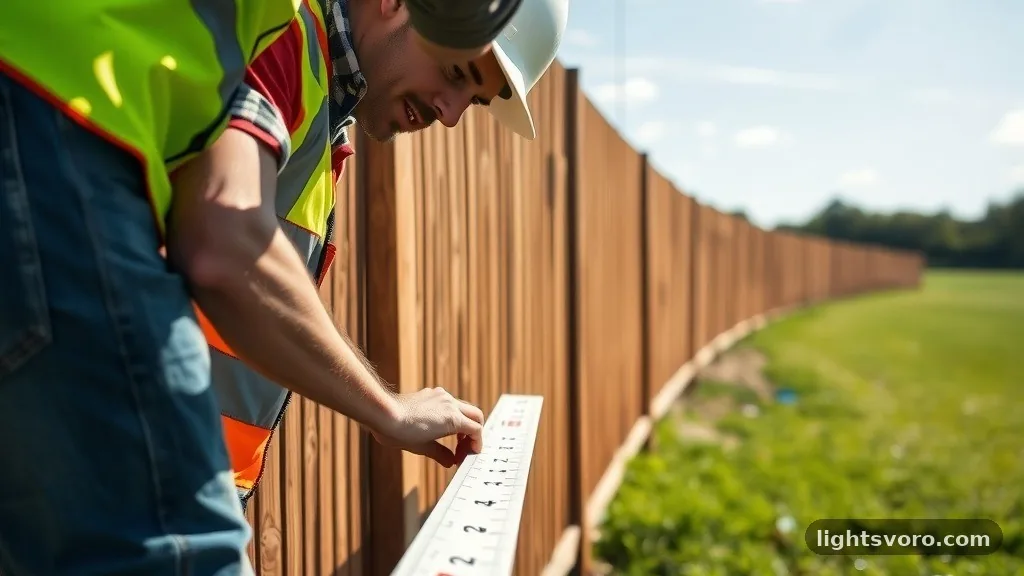
This conversion is helpful because many common construction materials, such as lumber or fencing, come in 10-foot or 20-foot increments. If you are building a fence, you would need five 20-foot sections to reach 30 meters.
This practical application of the measurement in construction helps bridge the gap between the metric system and the imperial system. When you understand that 30 meters is just a hair under 100 feet, you can quickly estimate distances in any environment where you are comfortable with feet.
The Diameter of Large Circles
Another interesting way to visualize 30 meters is by looking at the diameter of large circular structures. Think of a large roundabout in a city or the central circle of a major stadium.
If that circle has a diameter of 30 meters, it is quite large. It is big enough to contain a small park, a statue, or even a fountain.
If you are standing on one side of such a roundabout and looking across to the other side, the distance you are looking at is 30 meters. This visual is distinct because it shows the distance through an open, circular space. It feels different than walking down a hallway or a street.
The “empty” nature of a 30-meter diameter circle helps you appreciate the scale of this distance when it is not constrained by walls or linear paths. It is a wide, expansive measurement that can comfortably hold a significant amount of human activity.
Visualizing 30 Meters in a Domestic Setting
To bring this home, let’s look at your own living space. Most modern houses are not 30 meters long.
In fact, a 30-meter house would be a very long, sprawling structure. If you were to walk from one end of a 30-meter house to the other, you would pass through several rooms, a hallway, and likely the kitchen and living area.
If you want to visualize this in your own home, try to estimate how many steps you would take to cover 30 meters. If an average adult step is about 0.75 meters, you would need to take about 40 steps to cover 30 meters. Try walking 40 paces in a straight line in your home or your yard.
That distance is your 30-meter reference. Once you have walked it, you will never have to guess again; you will have a physical, embodied sense of the length that you can replicate whenever you need to estimate a distance in the future.
The Context of Safety and Visibility
In many safety regulations, 30 meters is a standard distance for visibility or hazard warnings. For instance, in some maritime or driving contexts, a warning signal or a marker buoy must be visible from at least 30 meters away. This is because 30 meters is considered an “interaction distance”—it is close enough to be significant but far enough to allow for reaction time.
When you are driving, the distance you cover in a few seconds at highway speeds is often much greater than 30 meters, but in urban settings, 30 meters is the distance at which you can clearly identify a person’s features or see a hazard on the road. This functional definition of 30 meters as a “reaction distance” adds a layer of importance to the measurement. It isn’t just a random length; it is a distance that defines how we interact with our environment and how we stay safe within it.
Comparing 30 Meters to Heights
We have looked at length, but what about height? If you were to tip a 30-meter object on its end, it would be as tall as a 10-story building.
This is a very helpful mental anchor for anyone living in a city. When you look up at a mid-rise building and count the floors, identifying the 10th floor gives you a very accurate sense of the 30-meter scale.
This vertical comparison is often easier to visualize than a horizontal one because we are used to looking up at buildings. The next time you are walking through a downtown area, pick out a building that is roughly 10 stories tall.
That vertical height is the same as the 30-meter horizontal distance we have been discussing. It is a powerful way to make the abstract number “30” feel real and concrete, linking it to the familiar skyline of your city.
The Use of Ropes and Cables
In many industries, from construction to rock climbing, rope is measured in long lengths. A standard climbing rope is often 60 meters long.
If you were to cut that rope in half, you would have two 30-meter sections. This is a very common way to handle rope in the field, as 30 meters is a manageable length for many tasks—such as rappelling down a medium-sized cliff or securing a load on a truck.
If you have ever handled a 30-meter rope, you know that it is a substantial amount of material. It is heavy, it takes up space, and it requires a significant amount of effort to coil.
This physical experience of the material itself—the weight and the volume of a 30-meter length of rope—provides another tactile way to understand the measurement. It reinforces that 30 meters is not just a line on a map; it is a tangible quantity of physical matter.
30 Meters in Industrial Applications
In industrial settings, 30 meters is a common length for conveyor belts, assembly lines, and pipe runs. If you visit a factory, you might see a production line that stretches for 30 meters. This length allows for a steady flow of materials and enough space for workers to perform their tasks along the line.
Understanding this industrial scale helps us appreciate how 30 meters is used to organize labor and production. It is a length that balances efficiency with manageability.
A line much longer than 30 meters might become difficult to oversee, while a line much shorter might not accommodate the necessary equipment. Thus, 30 meters represents a “sweet spot” in spatial design for many human activities, from manufacturing to athletic training and residential architecture.
Refining Your Mental Ruler
By now, you should have several reliable ways to visualize 30 meters. Whether you think of it as a 10-story building, an NBA basketball court plus two meters, a 100-foot distance, or 40 paces of your own walk, you now have a set of mental tools to estimate this length with accuracy.
The key to mastering these measurements is to stop thinking of them as abstract numbers and start thinking of them as experiences. When you walk, when you drive, and when you look at the buildings around you, try to apply these references. Over time, you will find that your ability to estimate 30 meters becomes second nature.
This skill is not only useful for practical tasks but also for understanding the world around you in a more precise and intuitive way. Whether you are a student, a professional, or just a curious individual, the ability to visualize length is a fundamental aspect of spatial awareness that enhances how you interact with your environment.