
Visualizing specific measurements is a common struggle, as our brains often prioritize relative speed and time over static spatial dimensions. When someone says a location is 500 meters away, the number might feel abstract, yet it represents a very specific spatial threshold that sits right between the “close enough to walk” and “better take the car” categories.
Understanding how far 500 meters really is helps in planning commutes, evaluating real estate, or simply navigating a new city with confidence. By breaking down this measurement into tangible, real-world objects and familiar urban landscapes, we can transform an invisible unit of distance into a mental map that is easy to reference.
The Human Experience of Walking 500 Meters
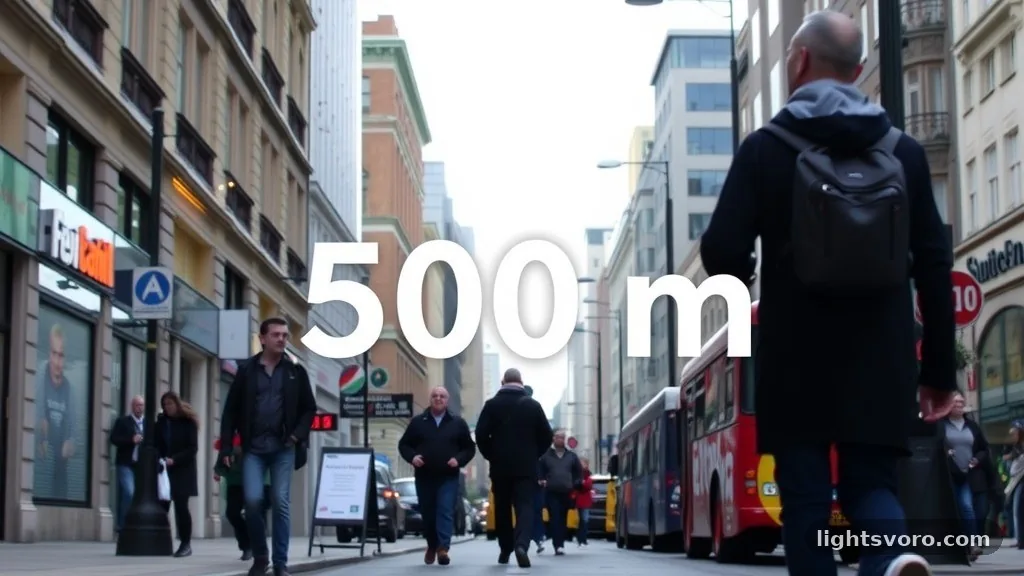
To truly grasp this distance, we must first look at it through the lens of human movement. For the average person walking at a moderate, leisurely pace, 500 meters takes approximately six to eight minutes. If you are briskly walking to catch a bus or train, you might cover this length in as little as four or five minutes.
This is a crucial metric for urban planning and personal fitness, as it defines the “pedestrian catchment area” for most public transit stops. When a city planner says a subway entrance is within 500 meters of a residential block, they are essentially promising that the average commuter can reach that station in under ten minutes.
This distance is also significant in the context of cardiovascular health. Walking 500 meters is often the baseline for low-impact physical activity recommendations. It is far enough to elevate your heart rate if you maintain a steady, purposeful pace, but short enough that it does not require specialized gear or intense preparation.
If you walk 500 meters to the store and back, you have completed a full kilometer of movement, which is a substantial step toward the recommended daily activity goals for most adults. By internalizing this “ten-minute rule,” you can gauge your surroundings without needing a map or GPS, simply by estimating how much time it would take to cover the ground on foot.
Ten Olympic Swimming Pools Placed End-to-End
Perhaps the most precise way to visualize 500 meters is through the standardized length of an Olympic-sized swimming pool. These pools are exactly 50 meters long. Therefore, if you were to drain ten of these massive aquatic arenas and line them up end-to-end, the total span would be exactly 500 meters.
This is a helpful mental anchor because most people have stood on the deck of a public or professional pool and felt the scale of that 50-meter stretch. Seeing the distance broken down into ten repeated units makes it easier to comprehend the vastness of the total length.
When you look at ten Olympic pools, you are looking at a distance that spans the length of roughly five professional soccer pitches. It is a scale that feels manageable when swimming—an athlete can sprint it in a few minutes—but feels significant when you imagine walking it. If you have ever been to a sports complex, try to identify the length of the pool and then imagine repeating that visual block ten times.
This stacking technique is one of the most effective ways to translate abstract metric figures into concrete spatial reality. It moves the number from a dry statistic to a physical, geometric volume that occupies space in your mind.
The Height of the Shanghai World Financial Center
When we move from horizontal distance to vertical height, we find some of the most impressive examples of 500 meters. The Shanghai World Financial Center, a titan of modern engineering, stands at a height of 492 meters. This is remarkably close to our target distance.
If you were to imagine the building tipped over on its side, the tip of its spire would reach almost exactly 500 meters from its base. This provides a stunning perspective on just how far 500 meters is when viewed in a vertical context.
Looking up at a building of this magnitude makes the 500-meter threshold feel much more intimidating than it does when walking on flat ground. While 500 meters of walking is a casual stroll, 500 meters of vertical space is a dizzying, cloud-piercing expanse. It highlights the difference between human-scale distance and architectural scale.
When you see photos of the Shanghai World Financial Center, take a moment to consider that the distance from the street to the very top is essentially your 500-meter unit. This helps you calibrate your eyes to recognize “500-meter scale” structures, which are becoming increasingly common in global metropolises.
The Willis Tower Antennas in Chicago
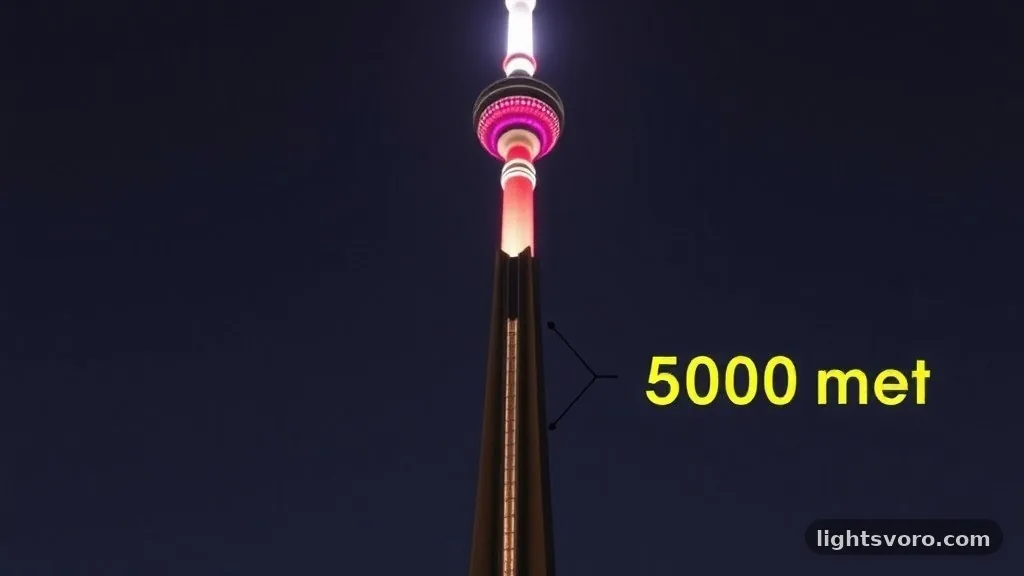
The Willis Tower in Chicago is another excellent reference point for this specific measurement. While the roof of the building sits at a lower elevation, the very tips of its massive antennas extend to a height that, when combined with the building’s structural footprint and surrounding context, often serves as a landmark for 500-meter visualization. The sheer scale of these structures reminds us that 500 meters is the threshold where a building stops being merely “tall” and starts becoming a “supertall” skyscraper.
Understanding the height of these iconic towers helps us appreciate the engineering required to defy gravity at the 500-meter mark. Wind loads, structural integrity, and elevator logistics all change significantly once you pass the half-kilometer height.
If you are standing in downtown Chicago, looking up at those antennas, you are looking at a distance that is roughly equivalent to a brisk ten-minute walk, just oriented toward the sky. This juxtaposition of vertical and horizontal distance is a powerful tool for developing a better sense of scale in our environment, whether we are navigating the streets or gazing at the horizon.
Five Full-Size Soccer Pitches
In the world of sports, the soccer pitch is a universal yardstick. A standard professional football (soccer) pitch is typically between 100 and 110 meters in length. Consequently, five of these fields laid out in a straight line will equal roughly 500 meters.
This is a particularly intuitive reference for sports fans. If you have ever sat in the stands and watched a player run from one end of the pitch to the other, you have a solid grasp of what 100 meters looks like. Multiplying that by five is a simple mental calculation that provides a very accurate estimation of the distance.
This comparison is also useful because it allows you to visualize the distance in a familiar setting. You can easily imagine the flow of a game, the size of the crowds, and the vastness of the green turf.
When you translate that visual into an urban environment—such as thinking about the distance between two subway stations or the walk from your car to a distant entrance—you gain a much clearer sense of the effort required. Five soccer pitches represent a standard “long block” in many city grids, helping you gauge travel times more effectively.
Twice the Height of the Golden Gate Bridge Towers
The towers of the Golden Gate Bridge are iconic landmarks, standing about 227 meters above the water. If you were to stack two of these massive orange towers on top of each other, you would reach a height of approximately 454 meters.
Adding a little extra for the base and the architectural flourish, you arrive almost exactly at the 500-meter mark. This is a fascinating way to visualize the distance, as most people have seen the bridge either in person or in photographs and understand the immense scale of those towers.
Using the Golden Gate Bridge as a reference point helps ground the 500-meter distance in something that feels historical and monumental. The bridge has stood as a symbol of engineering prowess for decades, and imagining its towers doubled provides a sense of the sheer size involved in a 500-meter span.
Whether you are using it for horizontal distance or vertical height, the bridge serves as a reliable mental anchor. It transforms the mathematical figure of 500 meters into a tangible, recognizable structure that you can visualize regardless of where you are in the world.
125 Floors in a Modern Skyscraper

If you live in or visit a city with modern skyscrapers, you can use floor counts as a proxy for height. On average, a standard commercial or residential floor in a modern high-rise is about four meters high, accounting for the slab, ceiling plenum, and usable space.
Therefore, a building with roughly 125 floors will reach a height of approximately 500 meters. This is a very helpful way to estimate the scale of the massive towers that define modern skylines.
When you are looking at a building and trying to guess its height, simply counting the floors—or estimating them if the building is too large—can give you a quick approximation of the 500-meter benchmark. If a building looks like it has over 100 floors, you are looking at a structure that touches the 500-meter mark.
This internal “floor counter” is a useful skill for architecture enthusiasts and city dwellers alike. It makes the concept of 500 meters feel much more approachable, as you can break down the daunting figure into small, discrete, and easily countable units of floor space.
Navigating Urban Landscapes: The “Long Block” Rule
In many major cities, the urban grid is designed with specific block lengths in mind. While these vary significantly, a standard city block in many American cities is roughly 100 to 150 meters long. This means that 500 meters is equivalent to about four to five standard city blocks.
This is arguably the most practical application of this measurement for the average person. If you are told that a destination is five blocks away, you can immediately visualize that as a 500-meter journey.
This “block rule” is an essential tool for urban navigation. It allows you to estimate walking time, energy expenditure, and even the likelihood of needing a taxi or rideshare. If you are in a city where blocks are longer, such as those with a more European or historic layout, you might find that 500 meters covers only two or three blocks.
Learning the specific scale of the city you are in is a quick way to master your local environment. By observing the distance between street signs or intersections, you can calibrate your own internal measuring stick to become a more efficient traveler.
The Science of Distance Estimation and Perception
Human perception of distance is notoriously flawed, often influenced by the density of the environment. In an open field, 500 meters feels relatively short, as your eyes can scan the entire distance without obstruction.
In a dense city, however, 500 meters can feel much longer because your line of sight is broken by buildings, traffic, and other obstacles. This phenomenon is known as the “clutter effect,” where the brain perceives a cluttered path as being longer than an open one, even when the actual physical distance is identical.
To improve your estimation skills, it is helpful to use the National Park Service trail guides and similar authoritative sources, which often provide clear, measured distances for various terrains. By practicing estimation in different environments—open parks vs. city streets—you can learn to adjust your perceptions based on the context.
This improves your ability to plan and navigate, reducing the anxiety of the unknown when you are heading to a new destination. Recognizing that your brain is playing tricks on you based on the environment is the first step toward accurate distance estimation.
The Role of 500 Meters in Athletic Training
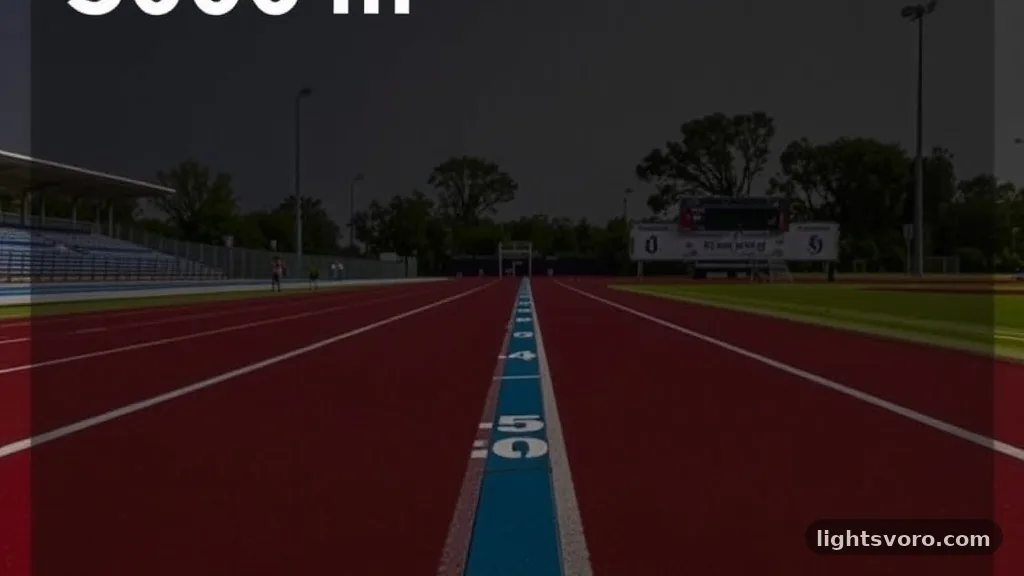
For runners and athletes, 500 meters occupies a unique space between a sprint and a middle-distance run. It is a distance that requires both explosive power and aerobic capacity.
In track and field, while the 400-meter dash is a standard event, the 500-meter distance is often used in training to build endurance for longer events or to test the upper limits of a sprinter’s range. Understanding what 500 meters feels like physically—the burn in your legs, the shift in your breathing—is a vital part of athletic self-awareness.
If you are a casual runner, you can use the 500-meter mark as a training milestone. It is a perfect distance for interval training, allowing you to push your pace without needing the recovery time required for a full kilometer or mile.
By tracking your time over a set 500-meter course, you can measure your progress and see direct improvements in your fitness level. This turns an abstract measurement into a personal goal, making the concept of “500 meters” something you can feel in your own muscles and lungs.
Comparing 500 Meters to Miles and Kilometers
While we often use meters in global contexts, it is helpful to relate this distance to the imperial system for those who are more comfortable with miles. 500 meters is exactly half a kilometer, or roughly 0.31 miles.
This is a useful conversion to keep in mind, especially if you are traveling between countries that use different measurement systems. If a sign says your destination is 500 meters away, you are looking at a journey that is just under one-third of a mile.
This conversion also helps when reading maps or using navigation apps that might default to miles. When you see a distance of 0.3 miles, you can mentally equate that to a roughly six-minute walk. This helps keep your expectations realistic.
Whether you are navigating a trail in the United States or a city center in Europe, having a quick conversion in your head ensures that you are never caught off guard by the distance ahead. It is all about building a flexible mental toolkit that allows you to translate numbers into real-world action.
The Psychological Impact of Known Distances
There is a distinct psychological comfort that comes with knowing the precise distance of your journey. When you know that a destination is 500 meters away, you can effectively manage your time, your energy, and your expectations.
This eliminates the “uncertainty factor” that often leads to frustration when we feel like a walk is taking longer than expected. By using the mental anchors we have discussed—the swimming pools, the soccer pitches, the city blocks—you can replace uncertainty with confidence.
Furthermore, knowing that you can cover 500 meters in under ten minutes can be empowering. It changes the way you view your city, turning it from a collection of hard-to-reach points into a walkable, connected network. You might find yourself choosing to walk rather than drive for short trips, simply because you know the distance is manageable.
This shift in mindset can lead to a more active lifestyle and a deeper connection to your surroundings. When you own the distance, you own your environment.
How to Calibrate Your Own Personal “500-Meter” Marker
To truly master the concept, you should calibrate your own internal sense of distance. Pick a familiar route in your neighborhood—perhaps the distance between your home and a local coffee shop or a park entrance—and check the distance using a digital map service.
If it is close to 500 meters, commit that specific route to memory. Every time you walk it, pay attention to the time it takes and the visual landmarks along the way.
Once you have this “anchor route,” you can use it to estimate other distances. If a new place feels like it is twice as long as your anchor route, you know it is roughly one kilometer. If it feels like half the distance, you are looking at 250 meters.
This process of personal calibration is far more effective than trying to memorize static facts. It turns the abstract measurement of 500 meters into a personal experience, tailored to your own pace and your own surroundings.
Conclusion: Owning the 500-Meter Distance
Ultimately, understanding how far 500 meters is really about bridging the gap between the abstract world of mathematics and the concrete world of human experience. Through the use of familiar objects like swimming pools, city blocks, and architectural landmarks, we can transform a dry metric into a useful, intuitive tool. Whether you are an athlete training for a race, a commuter navigating the city, or simply a curious observer, this distance is a fundamental part of how we interact with the world around us.
By practicing the strategies outlined in this guide, you can develop a robust sense of distance that will serve you in any environment. Start by identifying your own 500-meter anchor, pay attention to the time it takes to traverse that distance, and use the comparative examples provided to visualize the scale of the world around you. You now possess the knowledge to turn a simple number into a spatial reality, giving you the confidence to navigate, explore, and understand the physical space you occupy every single day.