
Visualizing distance is a skill that many of us underestimate until we find ourselves in a situation where a measuring tape is nowhere to be found. Understanding how far 20 feet is visually relies on anchoring your perception to common objects you encounter in your daily environment.
Whether you are planning a home renovation, arranging furniture, or simply trying to gauge the size of a space, having a mental reference point for this specific length can save significant time and effort. By breaking down this distance into items that are universally recognized, you can develop an intuitive “eye” for spatial measurements that functions reliably without the need for specialized tools.
The Anatomy of a 20-Foot Distance
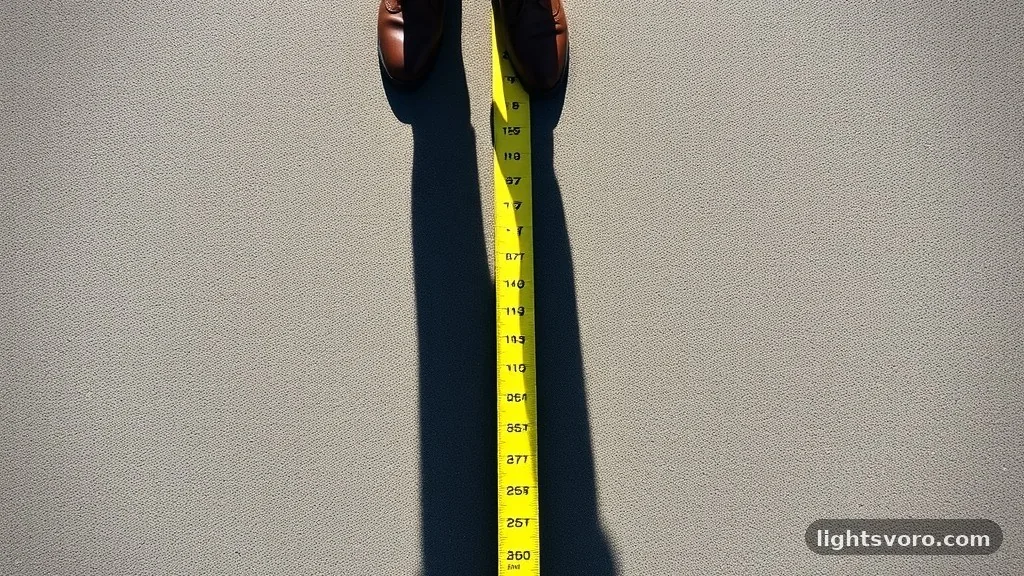
To truly grasp what 20 feet looks like, you must first understand the relationship between this distance and the standard units of measurement used in the American system. A single foot is defined as 12 inches, meaning 20 feet equates to 240 inches. When you translate this into meters, you are looking at approximately 6.1 meters, a measurement frequently used in construction and international logistics.
Visualizing this length requires you to think in terms of linear progression. If you imagine standing at one end of a 20-foot line, you are essentially looking at a span that is roughly seven times the length of an average adult’s stride.
This distance is particularly interesting because it straddles the line between a “small space” and a “significant span.” It is long enough to fit a large vehicle, yet short enough to be traversed in just a few seconds of brisk walking.
Because it is a round number, it frequently appears in building codes, safety regulations, and architectural planning. Mastering the visual estimation of this distance involves training your brain to identify the “footprint” of objects that naturally occupy this amount of space, allowing you to estimate distances in parking lots, rooms, or open fields with surprising accuracy.
A Standard Shipping Container as a Benchmark
One of the most reliable ways to visualize 20 feet is to look at a standard shipping container. In the logistics industry, the twenty-foot equivalent unit (TEU) is the gold standard for measuring cargo capacity.
These massive steel boxes are exactly 20 feet long, making them the perfect real-world reference for this specific length. If you have ever seen these containers stacked at a port or being transported on the back of a semi-truck, you have essentially witnessed the perfect physical representation of a 20-foot span.
When you observe a shipping container, try to memorize the proportions. It is not just the length that helps you anchor the distance; it is the height and width as well. A standard container is usually 8 feet wide and 8.5 feet high, creating a rectangular prism that is very easy to spot.
By using this as a mental template, you can project that same 20-foot length onto other areas. For example, if you are looking at a backyard and wondering if a patio would fit, imagine laying one of these containers flat on the ground. This provides an immediate, tangible sense of scale that abstract numbers simply cannot replicate.
Two Standard Single-Car Garage Doors
Most residential garage doors are designed to accommodate a single vehicle, and a standard width for one of these doors is typically between 8 and 10 feet. When you place two of these doors side-by-side, you arrive at a total width that is very close to 20 feet. This is a common architectural feature in suburban homes, and it serves as an excellent visual aid for anyone trying to estimate distance while driving through a neighborhood.
The next time you are passing by a two-car garage, take a moment to observe the span from one edge of the driveway to the other. By mentally “tracing” this line, you can calibrate your internal ruler. If you encounter a space that feels slightly wider than two single-car garage doors combined, you are likely looking at a distance that exceeds 20 feet.
This method is particularly effective because it uses a familiar, static structure that you likely see on a daily basis. It shifts the burden of measurement from the abstract to the observational, turning your morning commute into a practical exercise in spatial awareness.
The Height of a Full-Grown Giraffe

Nature provides some of the best scales for distance, and few animals are as iconic as the giraffe. When considering how far 20 feet is visually, it is helpful to look at the vertical reach of these creatures.
While an average adult giraffe stands between 14 and 19 feet tall, a particularly large bull can reach heights of up to 20 feet when fully extended. This makes the giraffe a perfect “living” yardstick for vertical distance.
If you are trying to visualize 20 feet in a vertical sense—such as the height of a two-story house or a tall tree—picture a giraffe standing upright. Because of their long necks and legs, they create a very distinct vertical line that is easy to visualize.
By stacking two smaller objects or imagining a structure that is slightly taller than a giraffe, you can quickly estimate heights that fall into the 20-foot range. This mental trick is useful for evaluating ceiling heights in large halls, the reach of a ladder, or the height of a utility pole, providing a biological anchor for an otherwise mechanical measurement.
Medium Billboard Signs (Junior Posters)
Advertising signage is ubiquitous in modern landscapes, and billboards serve as accidental rulers for the observant pedestrian or driver. While standard highway billboards are often much larger, the “junior poster” or medium-sized billboard is a common sight in urban areas and along secondary roads. These signs are frequently manufactured in sizes that hover around the 20-foot width mark to fit standard mounting brackets.
When you spot one of these mid-sized advertisements, use the edge of the frame to mark your 20-foot mental boundary. Because these signs are elevated, they are easier to isolate from the ground clutter, which can sometimes distort your perception of distance.
By focusing on the horizontal span of the sign, you can “measure” the space beneath it or across the street. This is a highly effective way to gauge distance in a busy city environment where other reference points might be obstructed by traffic, pedestrians, or street furniture.
The Length of a Large Pickup Truck
The American love affair with the pickup truck has resulted in a vehicle that is almost perfectly suited for our measurement needs. A long-bed, crew-cab pickup truck—often referred to as a “full-size” truck—frequently measures between 19 and 21 feet in length. This makes the modern pickup truck one of the most accessible and common objects for estimating 20 feet in a parking lot or driveway.
Consider the space a truck occupies when it is parked. If you imagine two of these trucks parked end-to-end, you would be looking at 40 feet, but a single truck gives you a near-perfect visual of the 20-foot mark. If you find yourself in a large parking lot and need to estimate a distance, look for a full-size pickup truck.
Use its length as a baseline, and then replicate that segment in your mind to measure the rest of the area. This technique is incredibly practical because these vehicles are everywhere, ensuring you always have a reference point nearby regardless of where you are.
Telephone Poles Lying on Their Side
Utility infrastructure is a constant feature of the landscape, and telephone poles are surprisingly consistent in their dimensions. While their height varies depending on the terrain and the number of power lines they carry, a standard distribution pole often stands between 35 and 45 feet tall. However, when you see these poles stored on the ground, perhaps at a construction site or near a utility depot, they offer a clear visual guide.
If you imagine a telephone pole cut roughly in half, you arrive at a length of approximately 20 feet. This is a great way to visualize the distance because the pole is a singular, continuous line. Unlike a car, which has wheels, windows, and gaps, a pole is a solid, unbroken object.
This makes it easier to mentally “paste” onto a surface to check for length. If you are ever trying to estimate the length of a driveway or the depth of a plot of land, try to visualize half of a standard utility pole laid out on the ground.
A 20-Foot Above-Ground Swimming Pool
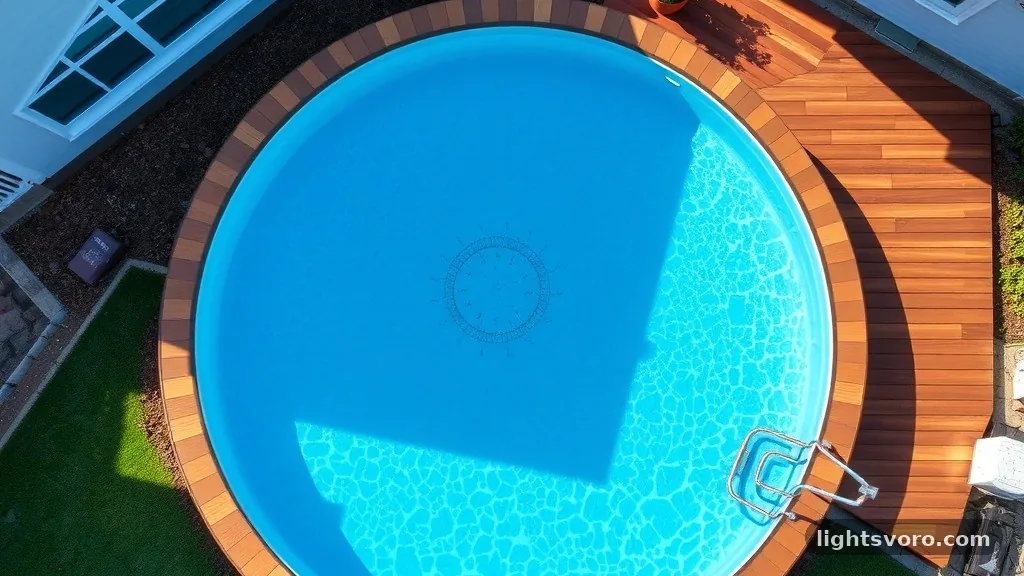
For those who have spent time in backyards during the summer, an above-ground swimming pool is a very distinct visual anchor. A round pool with a 20-foot diameter is a common size for residential properties. Because these pools are circular, they provide a consistent measurement from any direction—the diameter is always 20 feet, regardless of where you stand.
Visualizing a 20-foot pool is useful because it helps you understand how much “area” a 20-foot length consumes. It is not just a line; it is a footprint. When you look at the circle of such a pool, you are seeing a space that is defined by that 20-foot radius.
This helps you gauge whether a room is large enough to hold a specific amount of furniture or if a garden space can accommodate a specific feature. By using the pool as a spatial reference, you can transition from thinking in lines to thinking in dimensions, which is far more useful for interior design and landscaping projects.
Estimating Distance Without a Measuring Tape
If you find yourself in a situation where none of the above objects are present, you can rely on your own body to estimate 20 feet. The most common method involves the “stride” technique. An average adult’s walking stride is approximately 2.5 to 3 feet.
Therefore, if you take about 7 to 8 comfortable steps, you will have covered roughly 20 feet. This is a portable, reliable way to measure distance in almost any environment, from a hiking trail to a living room.
To refine this skill, practice walking a measured distance of 20 feet a few times, counting your steps as you go. You will quickly learn your own “personal stride,” which might be slightly longer or shorter than the average. Once you know your own measurement, you can use your feet as an internal ruler.
This is an essential skill for anyone involved in DIY home projects, moving furniture, or even setting up sporting equipment. For more information on how to measure distances effectively, you can consult the National Institute of Standards and Technology guidelines for units of measurement.
The Width of a Standard Two-Lane Road
Road infrastructure is designed to specific standards, and road width is one of the most consistent features of the built environment. A standard lane on a highway or a city street is typically 10 to 12 feet wide.
Therefore, a two-lane road—one lane in each direction—is usually right around 20 to 24 feet wide. This provides a very consistent “cross-section” that you can use to visualize 20 feet.
When you are walking across a standard residential street, you are essentially traversing a 20-foot span. The next time you are at a crosswalk, take a moment to look at the width of the road. That span, from curb to curb, is your 20-foot reference.
This is particularly helpful because it is a measurement you can experience physically. You aren’t just looking at the distance; you are walking across it. This kinesthetic learning helps solidify the mental image of 20 feet more effectively than looking at a static object from a distance, as your body registers the effort and time it takes to cover that specific length.
Large Recreational Boats and Trailers
Boating enthusiasts often deal with measurements in feet, and a 20-foot boat is a very common size for recreational watercraft. Whether it is a pontoon boat, a fishing boat, or a small cabin cruiser, these vessels are frequently designed to sit on trailers that are also around 20 feet long. If you live near a lake or a boat launch, you have a constant supply of 20-foot references passing by on the road.
A boat on a trailer is an excellent visual because it is streamlined and clearly defined. The trailer hitch to the motor or the stern provides a clean edge-to-edge measurement.
Because these items are often towed by large vehicles, they are usually seen in open spaces like parking lots or boat ramps, where you can easily compare them to the surrounding environment. If you are trying to estimate the length of a parking space or the size of a garage bay, look for a boat trailer; it is a precision-manufactured object that rarely deviates from its stated length.
The Length of a Standard School Bus (Halfway)
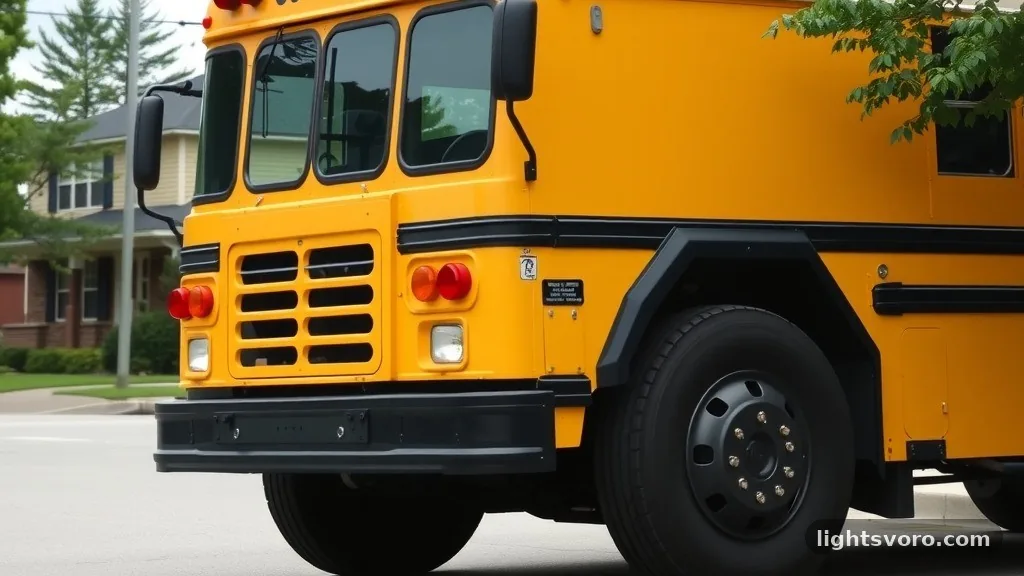
The American school bus is a massive vehicle that serves as a landmark on almost every suburban street. A full-size bus is typically around 35 to 40 feet long.
Consequently, the length of the bus from the front bumper to just behind the middle set of windows is roughly 20 feet. While it might seem counterintuitive to use a partial object, the distinct sections of a bus make it easy to mentally divide.
Try to visualize the bus in two halves. The front half, which includes the engine bay, the driver’s area, and the entrance door, is usually just under 20 feet. This is a great visual trick for those who are used to seeing these buses daily.
By identifying the “front half” of a school bus, you can instantly call to mind a 20-foot distance. This is particularly useful for gauging the length of large outdoor spaces, such as the depth of a school playground or the length of a row of parked cars, where the bus acts as a familiar, high-profile anchor.
Professional Basketball Court Segments
If you are a fan of sports, the lines on a basketball court can provide a wealth of measurement data. While a full NBA court is 94 feet long, the distance from the baseline to the three-point line, or the distance of the “key” area, involves smaller, more manageable segments. However, a great way to visualize 20 feet on a court is to look at the distance from the baseline to the top of the key.
Many amateur courts and high school gyms have markings that make it easy to see these segments. Even if you aren’t a player, the court is a very structured environment where distances are standardized.
By memorizing the length of the “paint” or the distance between the hoop and the three-point arc, you can develop a sense of scale for indoor spaces. This is especially useful for interior design, as it helps you understand how much space is required for movement and activity within a room.
The Distance Between Two Large Trees
In a park or a wooded area, trees are often spaced to allow for growth and maintenance. While nature is rarely as precise as a construction site, you will frequently find that mature trees in a landscaped park are planted roughly 20 feet apart. This spacing is common because it provides enough room for the canopies to spread without overcrowding, while still creating a sense of density.
To use this for your own estimation, find a park where the trees seem evenly spaced. If you can walk from one tree to the next in about 7 or 8 strides, you have found your 20-foot marker.
This is a fantastic way to practice your visual estimation because it forces you to account for the thickness of the tree trunks and the irregularity of the ground. By training your eyes on nature, you move away from the “perfect” measurements of manufactured objects and toward a more flexible, intuitive understanding of space that works in any environment, whether it is a formal garden or a wild forest.
Refining Your Spatial Perception
Developing the ability to estimate 20 feet visually is not about perfection; it is about building a mental database of references that you can access at a moment’s notice. By integrating these 14 common objects—from shipping containers and pickup trucks to the width of a road—you create a multifaceted toolkit for measuring the world around you.
The key is to practice. The next time you are standing in a large room or walking through a parking lot, challenge yourself to guess the distance, then use one of these references to verify your estimate.
Over time, this practice will become second nature. You will no longer need to consciously count your strides or look for a specific truck. Instead, your brain will automatically map the space against your internal “20-foot template.”
This skill is incredibly empowering, as it allows you to navigate the physical world with greater confidence and precision. Whether you are buying a rug that needs to fit a specific wall, planning a garden bed, or just curious about the size of a public space, having a reliable sense of distance turns the world into a more readable, manageable place. Remember that every measurement is a relationship between an object and the space it occupies.
By mastering the 20-foot scale, you are gaining a deeper understanding of how the built environment is organized and how you fit within it. Keep these references in mind, and you will find that the mystery of distance disappears, replaced by a clear, intuitive sense of the space around you.